“Nijinsky” with Hamburg Ballet, for Zyzzyva

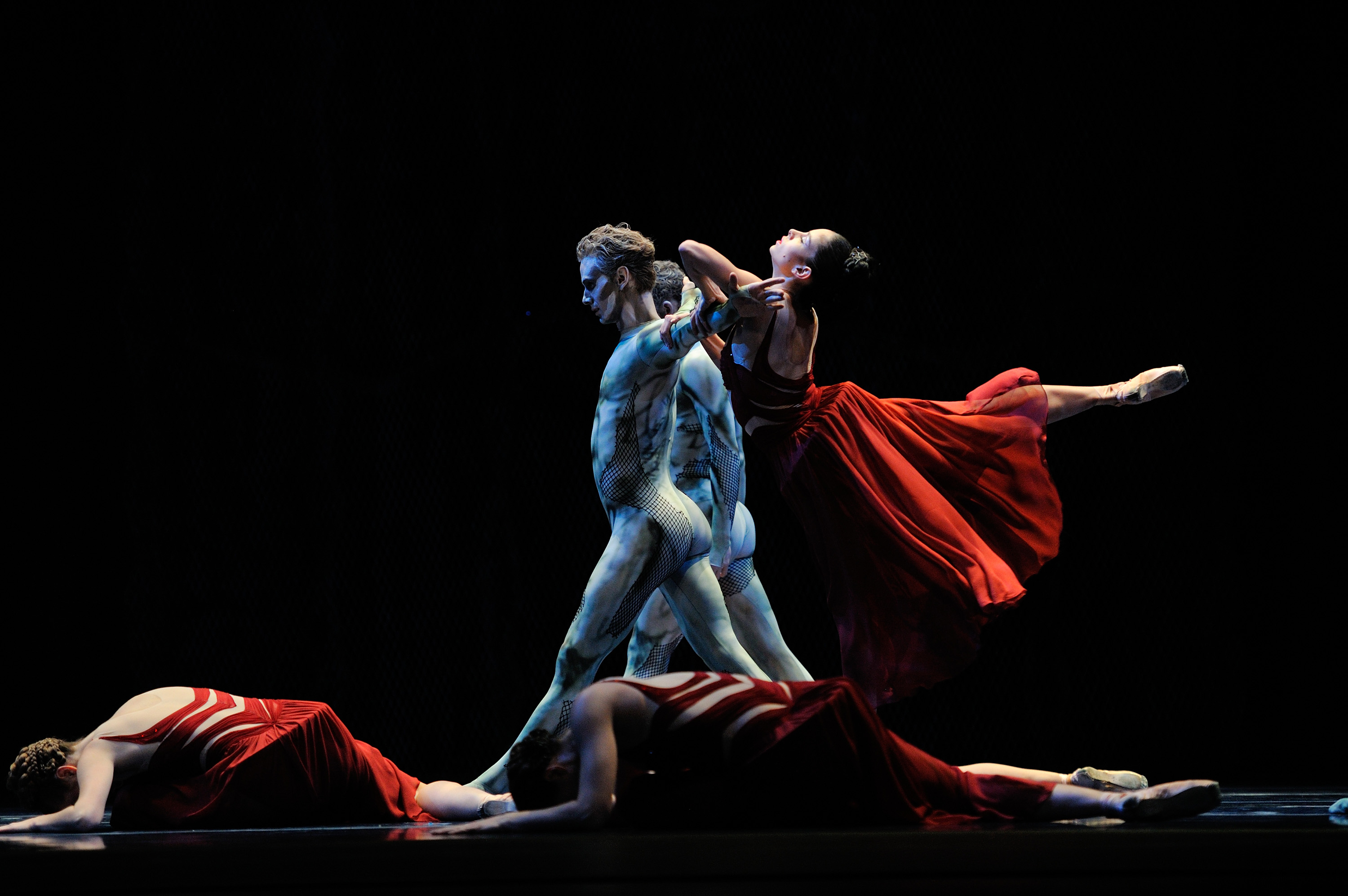
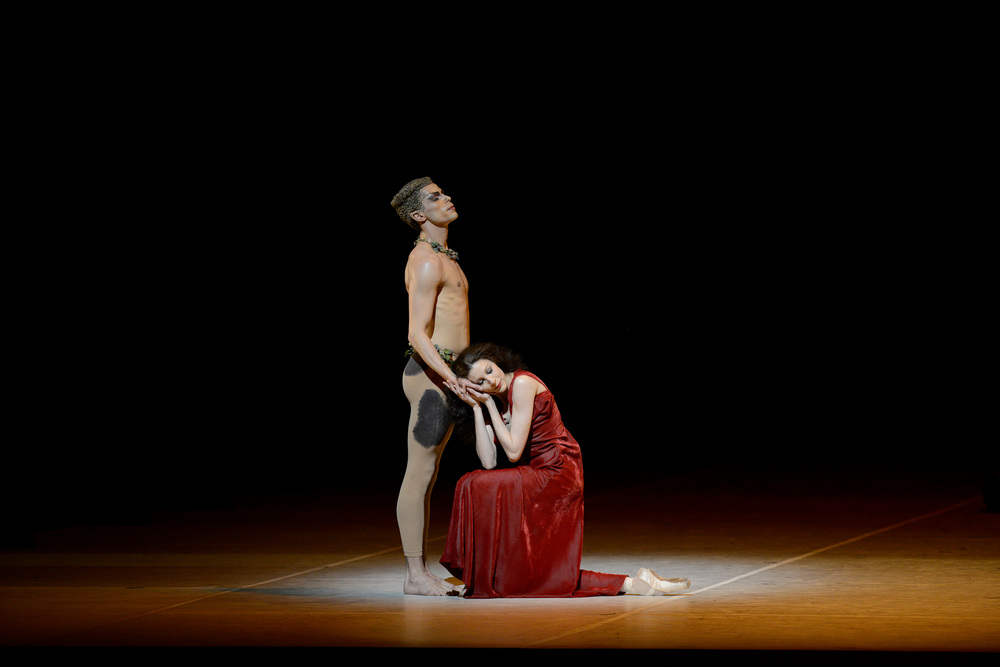
Thiago Bordin and Hélène Bouchet in Neumeier's Nijinsky. © Erik Tomasson

Thiago Bordin and Hélène Bouchet in Neumeier’s Nijinsky. © Erik Tomasson

A few people straggled almost unnoticed onto the stage of the War Memorial Opera House before the house lights had dimmed, and they began to talk. Even before the dancing had begun, their presence was an announcement that one had better not expect to see a traditional narrative ballet that opening night. However, the ambition to create a piece that comes close to the innovative prowess of its subject—Vaslav Nijinsky—would require more than an opening gimmick. Nijinsky is still one of dance’s towering figures, and one of the very few who merit the term “genius” both as a performer and a choreographer, blessed with abilities of the practitioner and the visionary. This is the man who envisioned a young faun as a masturbating nymph-chaser, and disguised a ménage à trois as an innocent game of tennis between two women and a man (and that was the cleaned-up version; his original idea was for an all-male cast and even less ambiguity). His ballets incited riots and still look modern today, while other examples of innovative and even revolutionary art softens and grows quaint with time.

John Neumeier’s Nijinsky, performed in a limited run by San Francisco Ballet guest company The Hamburg Ballet last month in San Francisco, imagines Nijinsky at the moment of his last public performance—in Switzerland in 1919—already in the throes of the mental illness that would end his career early and would plague him unto his death in a clinic at age 61. Neumeier has his Nijinsky revisit important moments of his life, dancing with and as characters from his most famous ballets. This could be seen as a predictable physical transposition of the dancer’s schizophrenia, but at times the elements from Nijinsky’s own choreography and that of others whose ballets he made his own, when combined, embellished, and added to the foundation of Neumeier’s own choreography, illuminate areas of his persona and history in ways both beautiful and seemingly true (anyone who has not read one of the many bios on the dancer, or Nijinsky’s own harrowing diaries, can’t help but take Neumeier’s word for just how true).

Here we see Nijinksy the very young man, new star of the Imperial Ballet and the newly named Ballet Russes; he’s lush, self-absorbed, and vulnerable as the Golden Slave in Fokine’s Scheherazade, caressing himself and obliviously bewitching the people around him. Even more effective is the pas de trois between Nijinsky, his future wife, Romola de Pulsky, and the Faune from L’Après midi d’un faune, acting as a sort of erotic surrogate for a preoccupied Nijinsky. Known for being cold and dull in real life, he channeled his entire wealth of charisma into his stage persona. In this scene he is a sort of indifferent, while this wilder, more sexual persona from his imagination woos the rapt woman. (That this is a preposterous fabrication of events—Romola having stalked and practically bullied the known gay dancer into an icy marriage—should only bother those who attend the ballet seeking facts and accuracy.) (continue reading)

Posted in ART, ballet, dance, REVIEWS, San Francisco | Tagged , , , , , , , , , | 1 Comment

South Africa in Apartheid and After at SFMOMA, Art Practical

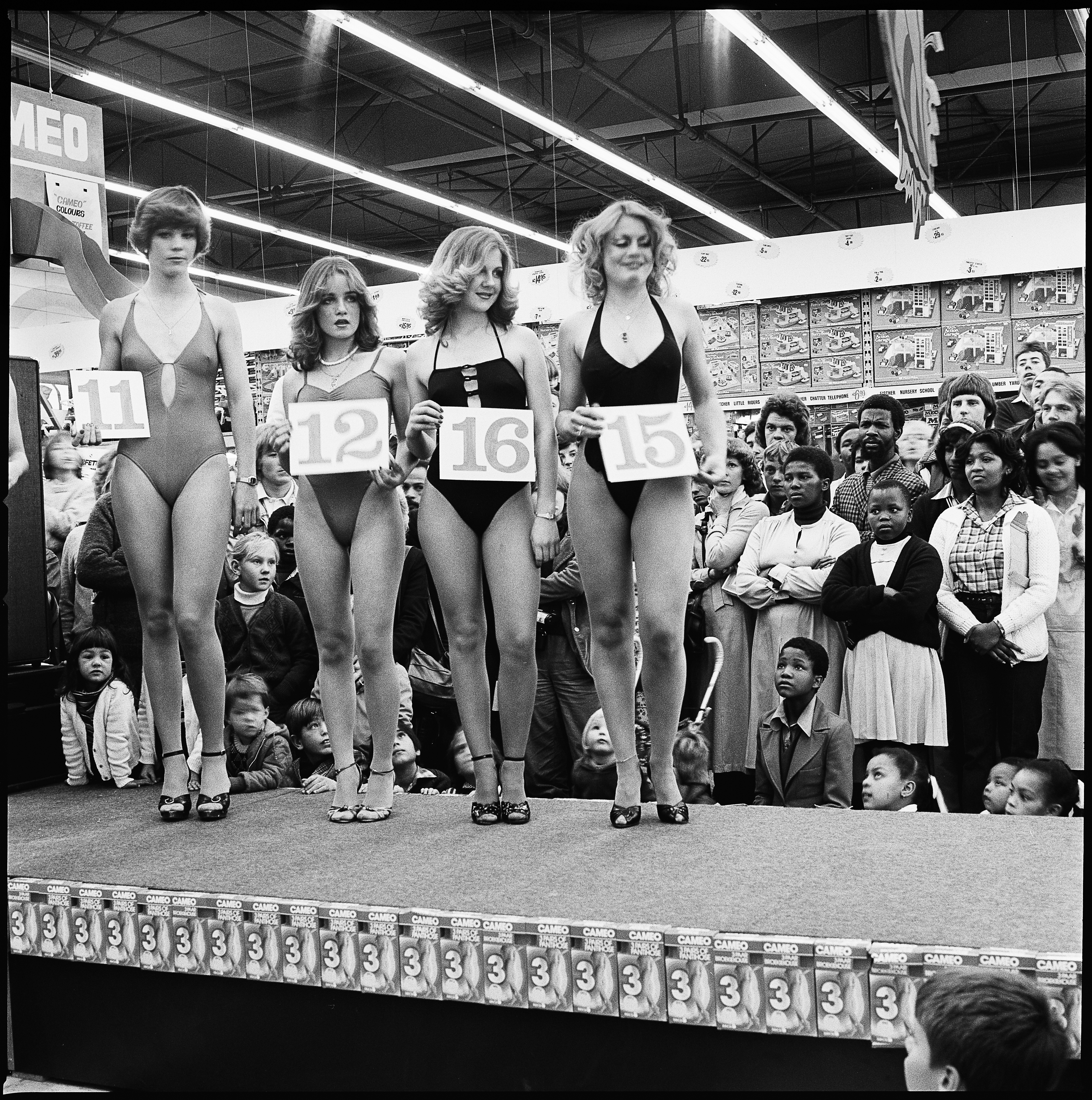
David Goldblatt, Saturday morning at the Hypermarket: Miss Lovely LegsCompetition,1980; gelatin silver print; 11 x 11 in. (28 x 28 cm);Courtesy of the artist and Goodman Gallery, South Africa; © DavidGoldblatt

David Goldblatt, Saturday morning at the Hypermarket: Miss Lovely Legs
Competition,1980; gelatin silver print; 11 x 11 in. (28 x 28 cm);
Courtesy of the artist and Goodman Gallery, South Africa; © David
Goldblatt

“More and more he is convinced that English is an unfit medium for the truth of South Africa.”—J.M. Coetzee, Disgrace.

South Africa in Apartheid and After, at the San Francisco Museum of Modern Art, is a photographic investigation of the troubled country by three photographers: David Goldblatt, Ernest Cole, and Billy Monk. All native South Africans, each brings a very different perspective on his homeland.

The exhibition opens with photographs from Goldblatt’s 1982 project In Boksburg, a group of portraits of day-to-day life in a middle-class, predominantly white suburb of Boksburg, near Johannesburg, shot between 1970 and 1980. Goldblatt’s photographs are riveting as a catalogue of the accouterments of suburban living and the globalization of its milquetoast aesthetic: tract housing, OCD lawn care, concrete fences. Pervading his images is the sense of willful escapism that the suburbs can impart and are even designed to do. Perhaps this interpretation comes with an awareness of the ignominies of apartheid, particularly the disgrace of its final convulsions before its repeal in 1990. Considering that In Boksburg was shot during one of the most shameful episodes in human history, the series reads like a study of the deliberate obliviousness of its subjects.1

Many of Goldblatt’s images convey this contradiction between a place and the aspirations played out there. Black people rarely appear in the photos, and there is little evidence of black life or culture at all, except for a few shots of people looking dour at community meetings organized to address increasingly dreadful race relations. How strange the white semifinalists of the “Miss Lovely Legs” competition look, with their feathered hair and peekaboo nipples, teetering on a platform in front of an audience composed mostly of children and modestly dressed blacks. Other photographs require the viewer’s knowledge of their historical context to the land for the fullest reading. In one image, a smiling woman appears to be leading a small group of equally glee-filled children in song or to be telling a story. These are the Voortrekkers, a Boy Scout–like group set up by Afrikaner nationalists who found the actual Scouts to be too diverse and so established a new group to exclude not only black South Africans but also English-speaking whites and Jews.

Just as our American suburbs represent an escape from the “evils” of city life, Boksburg comes across as a sort of blinkered retreat from the ugly surrounding reality of the imperial cultures’ making. Goldblatt suggests that the transplanted cultures have brought with them a strict refusal to be affected by or to acknowledge their surroundings. Their homes could be in any suburb of the developed Western world; their hobbies and entertainment are familiarly middlebrow; their disregard for the humanitarian outrages their lives are built on is palpable. (continue reading)

Posted in ART, photography, REVIEWS, San Francisco | Tagged , , , , , , , , , | 3 Comments

It Can’t Happen Here: Sexual Harassment in the Theatre, Theatre Bay Area Magazine

Image“We have a zero-tolerance policy on sexual harassment, and we have never had any complaints.” This is what I heard from the representatives of every Bay Area theatre company I asked (the ones who responded to my query, that is) regarding their histories and policies on sexual harassment. While this consensus paints a rosy picture of our theatre community and its progressive attitudes, I know, and many people who read this will know, that this is not entirely accurate. While we may be past the era of unscrupulous producers installing two-way mirrors in women’s dressing rooms (as was rumored to have been discovered during the Orpheum’s renovation years ago), theatre people are not too different from everybody else, and sexual harassment and assault are still all too prevalent.

We conducted an informal, anonymous survey through the Theatre Bay Area Facebook page and e-newsletter. While the sample size was small and necessarily self-selecting, the number of people who had experienced harassment was striking.

One San Francisco–based actor who responded to our survey remarked, “Theatre is clearly a different world than many workplaces regarding human resources in general. As such, I have found a lack of training regarding sexual harassment rights, filling of complaints and proper reporting of such incidents, to be the norm.” Another local actor expressed the sort of sentiment that perhaps keeps us from advancing on this issue, if not actively perpetuates it: “it’s the American Theater and not a regular workplace so ordinary rules don’t apply. Plus your [sic] only together for weeks rather than years. This school teacher mentality is inappropriate in this art form and should be abandoned.” The idea that the theatre (or any place) is and should be regarded as something other than a workplace, that it’s an environment where behavioral mores and laws don’t apply, seems to be the root of the problem (as is the astonishing assertion that, because of theatre’s transient convergences of personalities, one should be willing to put up with treatment in the theatre that is frowned upon elsewhere or even illegal). It’s a dangerous attitude: “The rules don’t apply to us, so we don’t need to acknowledge them. Stop complaining.”

While it takes a long time, generations even, to change cultural psychology, the steps we as a society take to redress our attitudes toward each other, and therefore the way we act, include implementing laws to dissuade—and promise severe punishment for—certain behavior. We’ve categorized inappropriate touching in public and in the workplace, we’ve delineated what constitutes harassing talk, we have criminalized nonconsensual sexual intercourse, and we have promised that breaching these guidelines will cost you your job and possibly your freedom.

But these strictures only work as well as the people implementing them, and again and again we hear about cases in which incidents of harassment were reported but no action was taken because managers purported not to know what to do about them. This is something that happened in a San Francisco theatre last year:

A woman works part-time in a local theatre. A board member of the theatre takes an interest in her, uses what are supposed to be work-related conversations to introduce topics that anyone might agree are inappropriate to the workplace, like what kind of semiviolent sexual practices he enjoys. She stops responding to his calls and frequent texts. Her colleagues notice what they interpret as nothing more harmless than his crush on her and tease her, even after she makes it clear to them that their teasing aggravates, rather than assuages, her distress. (Any sort of teasing by colleagues after a person has asked them to stop is illegal in the workplace.) He disregards her attempts to ignore him and continues to ask her out and make inappropriate remarks to her at work. She asks the artistic director what can be done about this increasingly intolerable situation. “I don’t know what to do” is the response.

Her initial complaints disregarded or met with confusion, she begins to second-guess her instincts, to believe that she has no choice but to accept the invitations of her pursuer. The frightening thing to observe in her retelling is the gradual dissolution of her autonomy, imperceptible to her at the time but unmistakable in retrospect, abandoned to his subtle but precise manipulation of her by the people who are required by law to intervene. She is alone in her suspicions that she is being subjected to morally and professionally indefensible behavior and worries that she will lose her reputation, her peace of mind, even her job, if she continues to complain about what no one seems to take seriously or believe that something can and must be done to stop it. Perhaps she has misjudged him? He brings her soup when she is sick. He invites her out for casual dinners and appears for a time to have accepted her request that their relationship remain strictly professional and platonic. The fact that nobody seems to take her worries seriously makes her wonder if she’s overreacted, and she starts to rationalize to herself that his behavior, though perhaps inappropriate and crass, is not actually dangerous. When he doesn’t do or say anything that makes her uncomfortable for several meetings, she lets her guard down a little, starts accepting invitations to dinners at his house.

One night, he rapes her.

(continue reading)


Posted in ART, San Francisco, theatre | Tagged , , , , , , | 2 Comments

My Play from the SF Olympians Festival

poster art by Emily Barber

poster art by Emily Barber

Ok, so a short play I wrote (that is, the first play–in fact, the first piece of fiction/adaptation I’ve ever attempted) was read last night as part of the SF Olympians Festival, a thirteen-day series of staged readings of original plays with classical themes by local writers. I took two sisters: Mnemosyne, goddess of memory and mother to the muses, and Themis, goddess of good counsel and order, mother of the seasons, peace, justice, and later, the fates. They were daughters of Gaia (earth-mother) and wives to Zeus (at different times, I should think). We were free to interpret the goddesses and their characters in any way or at any point in their goddess-lives that we chose. So I made your standard family estate squabble. Here is an excerpt:

Mnemosyne: Do you remember when she ordered the box of ladybugs from that gardening place? I think she assumed there’d be 30 or so in it, that she’d have a small colony for all her plants in the living room and corridor. You weren’t there when she opened the box; it must have been hundreds that swarmed out. First they hovered in place, a dense red cloud humming under the chandelier. Then the cloud seemed to explode, and these buzzing red dots just flew in every direction. I don’t think I’d ever seen a ladybug before, and now dozens were flying into my face, grazing my arms and legs, getting stuck between my toes and tangled in my hair. I remember thinking that the world had changed, that these furious little creatures would now always be with us, recklessly slamming their tiny, hard bodies into the windowpanes, alighting with a shudder onto our eyelids and noses when we lay down, crawling along every surface in our home so that it looked animated and we couldn’t walk or sit without hearing the startling crunch of their dotted shells under us. Somehow I don’t remember what she did after she released the insects into the room. I only remember standing alone in the swarm, blinking as they brushed past my eyelashes and tickled my ears. And then I went to your room. I imagined you’d know what to do, how to live with them. You were sitting on your bed with your arms crossed in front of your chest. The ladybugs were flying all around you and you looked so disgusted.ladybug

Themis: Of course I was disgusted. Who orders live insects for a few indoor potted plants? And doesn’t even check to see how many of them they’d get?! You were little; everything that didn’t make sense was magic and that was fine with you. But I was picking carcasses out of my shoes and backpack and pockets and hairbrush for the next two months. Can you tell me what is more depressing to a ten year old than a handful of dead ladybugs? Their legs all folded under and brittle and falling off… You don’t remember what mom did after that because she left you, literally crawling with insects, and went back to her studio. I’m the one who went around opening all the windows. I’m the one who spent the next four hours with a jar and a piece of paper trying to capture as many as I could and release them outside. I’m the one who had to pick bits of crushed exoskeleton out of the cat’s teeth for a week. Mom just unleashed this chaos into the house and pranced off! As usual.

M: But it was beautiful! For a moment.

T: Everything was beautiful for a moment. But then it just turned into something unfinished that no one was willing to deal with but me. No one but me ever wanted to think about the fallout of these caprices. We have a house full of half-painted, rotting canvases, heaps of unfinished mothworn dresses with the needles still stuck in the hems, we have a house itself that none of us can afford to keep and no one wants to sell.

Voilà. To read the full ten-page script, click here.

Posted in PERSONAL ESSAYS, San Francisco, theatre | Tagged , , , , , , , , | Leave a comment

“Rudolf Nureyev: A Life in Dance” at the De Young, Art Practical

Rudolf Nureyev, Moments, with the Murray Louis Dance Company, 1977. Photograph © Francette Levieux

Rudolf Nureyev, Moments, with the Murray Louis Dance Company, 1977. Photograph © Francette Levieux

A museum may not be the ideal venue to showcase a performative art such as dance, which only exists in the living bodies of its practitioners. So it makes sense that the de Young Museum, in collaboration with France’s Centre National de Costume de Scène, chose to highlight an aspect of the mobile art that can exist in a static installation for Rudolf Nureyev: A Life in Dance. Contrary to its title, this exhibition washes over great swathes of the artist’s life and explores not dance itself but one aspect of it: costuming, specifically seventy costumes codesigned by Nureyev to be worn by himself and other dancers in the many ballets he choreographed, revived, and staged around the world from the early 1960s to his death in 1993.

It is impossible to appreciate the engineering that Nureyev put into these garments in a context wherein none of dance’s physical demands are also on display. Still, costume is a compelling curatorial focus here: Nureyev was not only the ne plus ultra of physical grace and prowess in the last century of dance, but he had a flair for dressing. This extended to his offstage style as well, as evidenced, sometimes stunningly and sometimes hilariously, in several featured portraits. He also possessed a practitioner’s knowledge of the moving body’s needs and the clout to manifest his ideas. While still a young dancer with the Kirov and already its star, Nureyev infamously stalled a performance by refusing to go onstage in the baggy pants that were still the norm in Russia, though they had long been abandoned in the West. Tradition had dictated that men wear bloomers over their tights despite the fact the garment obscured the visibility of the legs, which can communicate story, intention, even emotion to an attentive audience. Instantly, Nureyev had overturned custom and set a new precedent, and for the rest of his career he would display the same consideration of the needs of both the dancer and the audience when he worked with designers to fashion costumes for his productions.

Costume for the Lilac Fairy Queen in Sleeping Beauty, Teatro alla Scalla, Milan, 1966. Collection CNSC/Rudolf Nureyev Foundation. Photograph by Pascal François/CNCS.

Costume for the Lilac Fairy Queen in Sleeping Beauty, Teatro alla Scalla, Milan, 1966. Collection CNSC/Rudolf Nureyev Foundation. Photograph by Pascal François/CNCS.

For his own ensembles, Nureyev redesigned the doublets with diagonal seams in front, which visually tightened the waist without constricting movement. He added underarm gussets to facilitate the arms’ movement but kept the sleeves mounted high and the cuffs snug and added beading and embroidery to visually elongate the line. He also had the women’s costumes reworked to his specifications, minimizing embellishments except to distinguish principal characters from the corps and lowering and lengthening the tutus to emphasize the litheness of the waist.1 Although such refinements and additions all bore dramatic and graphic purpose, Nureyev nevertheless acquired a reputation for “the Tartar taste of barbarous sumptuousness.”2 On reviewing the evidence, however, this verdict seems more like sour grapes on the part of the deposed tastemakers of the old guard. Cultural snobbery aside, that “barbarous sumptuousness” is the only aspect of the costumes discernible to the untrained eye and is thus the reason to see this exhibition: from the rouge bordeaux satin tunic from Romeo and Juliet—warm and rich even where it has faded—to the embroidery and beading designs curled over the breasts and the tiered ruffling on the top plains of the tutus in Sleeping Beauty, to the adapted saris of La Bayadère. (continue reading) 

Posted in ART, ballet, dance, REVIEWS, San Francisco, theatre | Tagged , , , , , , , | Leave a comment

“Desert Jewels” and “Anima and Tuareg” at the Museum of the African Diaspora

Image

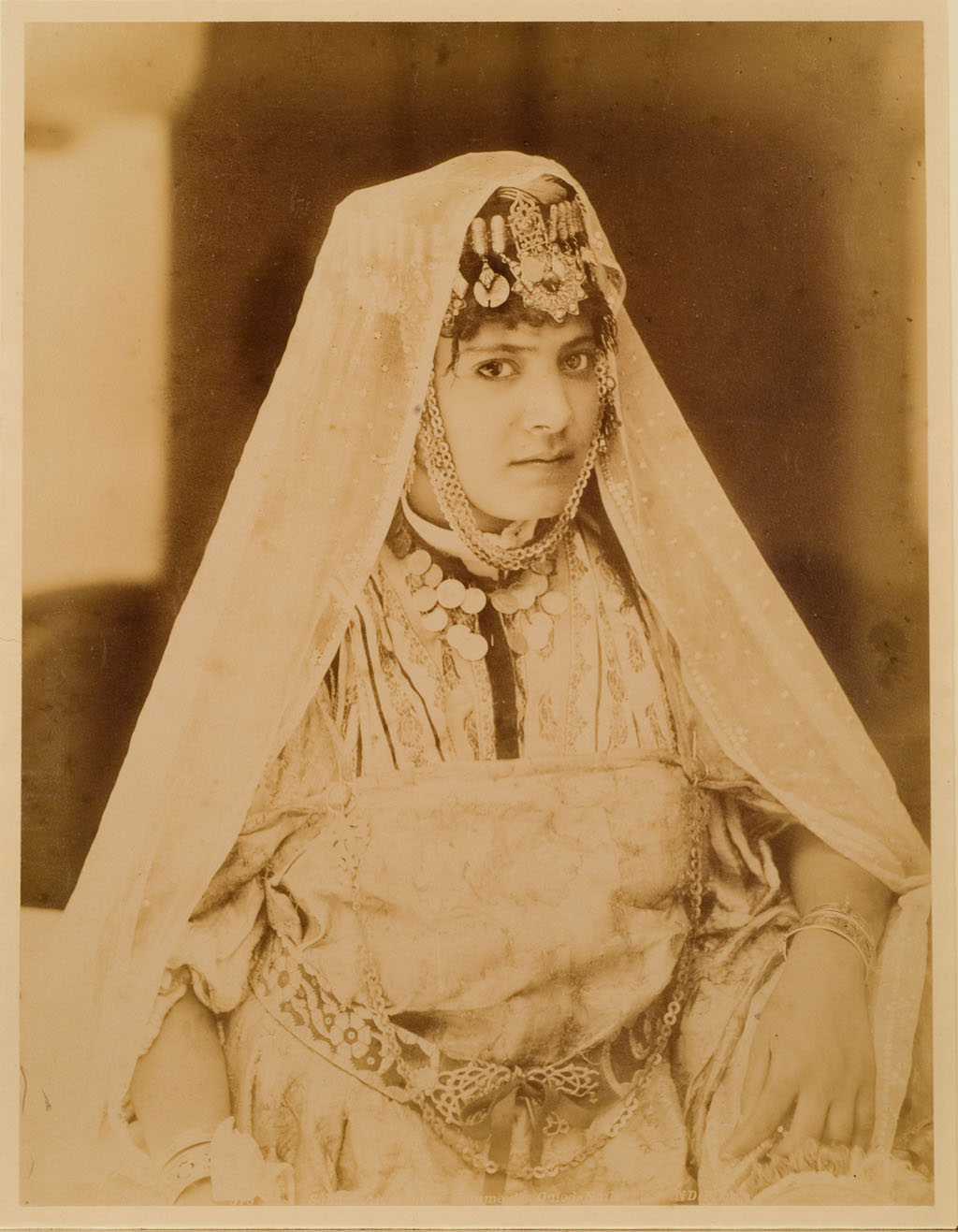
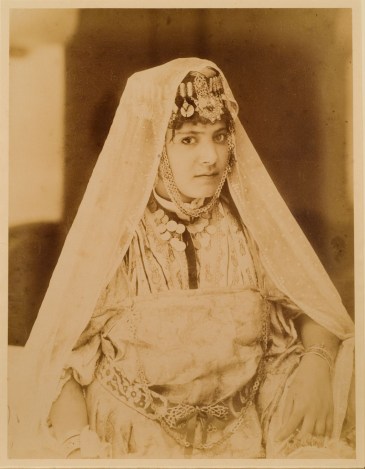
Woman of the Ouled Nails, Algeria. Ètienne and Louis-Antonin Neurdein, c. 1880. Original photograph on albumen paper from a collodion

The Museum of the African Diaspora is hosting two small but excellent shows this month. “Desert Jewels: North African Jewelry and Photography from the Xavier Guerrand-Hermès Collection” features tribal jewelry and nineteenth-century photographs from an era when  advancements in photographic technology allowed documentarians and artists to take advantage of and further intensify European fascination with the Orient. Previously, photographers had to carry equipment both cumbersome and easily destroyed by the heat and sandstorms prevalent in the region, and because of the long exposure times needed, mostly made images of static scenes: landscapes, archeological dig sites, and monuments. But the development of the collodion glass-plate negative and the later invention of the Kodak handheld made it possible to capture street scenes and people. Photographic studios opened in major cities in Morocco, Turkey, Egypt, and Algeria, catering to both practitioners and tourists. They produced a not-quite-trustworthy record of life in these colonial regions. Photographers often staged scenes to fit an exoticized European idea of the East, rather than faithfully documenting it. The results, though often gorgeous, reflect the patronizing attitude at the heart of infatuation: the truth bears little importance next to the myth, which is itself more a portrait of the infatuated than of the object of infatuation. Europeans held dear the notions of their own societal, even genetic, superiority, and enjoyed observing a contrast between what they regarded as evidence of their own highly-civilized society and the colorful but lagging cultures they oppressed.
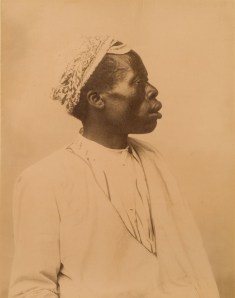
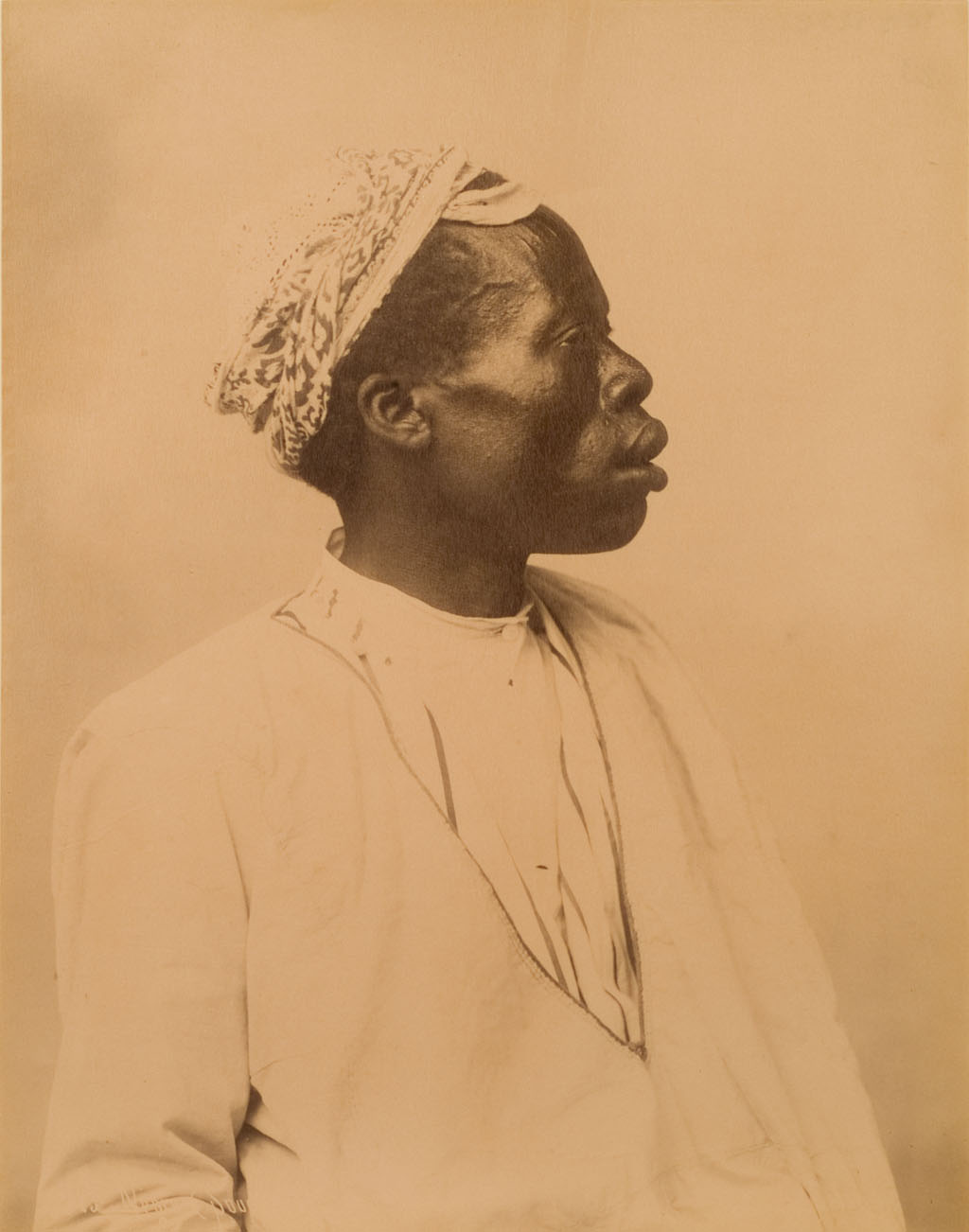
Portrait of a man, North Africa. Pascal Sebah, c. 1870. Original photograph on albumen paper from a collodion glass negative

Portraits of black men in profile were used in the pseudoscience anthropometry, which sought to classify human beings along the evolutionary scale according to race, and, specifically, skull shape.

Photographers often used studio backdrops rather than capturing their images in situ, and paid models to pose with props and in stylized dress to cater to a particular European fetish for the louche, sensuous Orient of myth. The French, whose women were still binding their own torsos in rib-crushing corsets, loved the images of these women who were costumed and deported to more frankly proclaim their roles as owned objects of pleasure. Always bejeweled and dressed for easy access (ideally with at least one nipple visible), they often held a musical instrument or waterpipe and lounged in fabricated studio settings which sometimes even included a barred window in the shot to suggest the photographer had gained entree into the secret, off-limits world of the harem.

While the collection, and the movement it arose from, is not presented as ethnographically accurate, it does offer some revelations about the lives of the diverse peoples represented. In the show’s catalogue (Museum for African Art, 2008) author Cynthia Becker cites curator Christraud Geary’s analysis of colonial-era photo-postcards from Africa: “…(she) encourages scholars to consider African photographic subjects as active agents who asserted views of themselves and represented their personal, social, and religious identities through particular props, clothing, and poses…” and deduces the background of one of the Tunisian models in the collection by the musical instrument he holds. The stringed lute gombri identifies him as a descendent of the enslaved Sahelian Africans, brought to North Africa in the trade and who, upon the banning of slavery there,  became healers who used such instruments in possession-trance ceremonies. Also historically interesting are the images of the women of Ouled Nail (ex. above), the world’s first performers of what we now know as belly dance. Graceful, dignified and magnificently robed, they nevertheless have the exasperated look in their eyes of women whom poverty has dispatched into a life of providing light entertainment for the French.

However, despite some few bits of truth eeking past the fiction, the collection overall carries the tone of romance, of artists manipulating life to fit a fantasy, and of subjects patiently enduring their reduction into personage. In one photograph (for some reason not available for reproduction in the press) featuring the popular harem motif, two reclining women hold musical instruments, but the third is doing the artist’s model equivalent of “phoning it in.” She slouches against the pillows with her head resting on her hand, glowering at the viewer with unmasked bitterness, as if she recognizes that what she is contributing to but has little control over is her own fetishization. “Really? This panto again?” she seems to be thinking. It is hard not to feel that simply by viewing her one is complicit in her exploitation.

So, while the photographs in “Desert Jewels” are themselves of dubious documentary value, it would be helpful if some of the ways in which the photographers of the era stretched or distorted the truth were explained–if this is a romanticized view, what is the unromanticized one? Ok, it is unlikely that any Western photographer would ever have gained access to the interior of a harem, and they often chose to emphasize a European caricature of the “lascivious” North African woman rather than simply take portraits of people as they were, in the settings in which they existed; why is that, and what aspects of day-to-day life fell so short of the fantasy that the majority photographers, or their public, chose to let them go undocumented? The museum and the writers of the accompanying book didn’t elaborate. Even if the work, or this collection, is not presented as documentary in nature, simply stating that a lot of the images diverged from reality to fit a romantic ideal raises the question of what exactly that reality was.
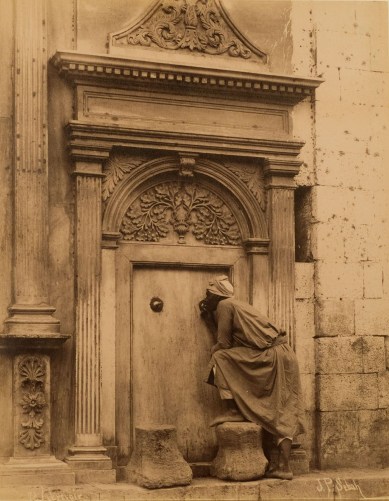
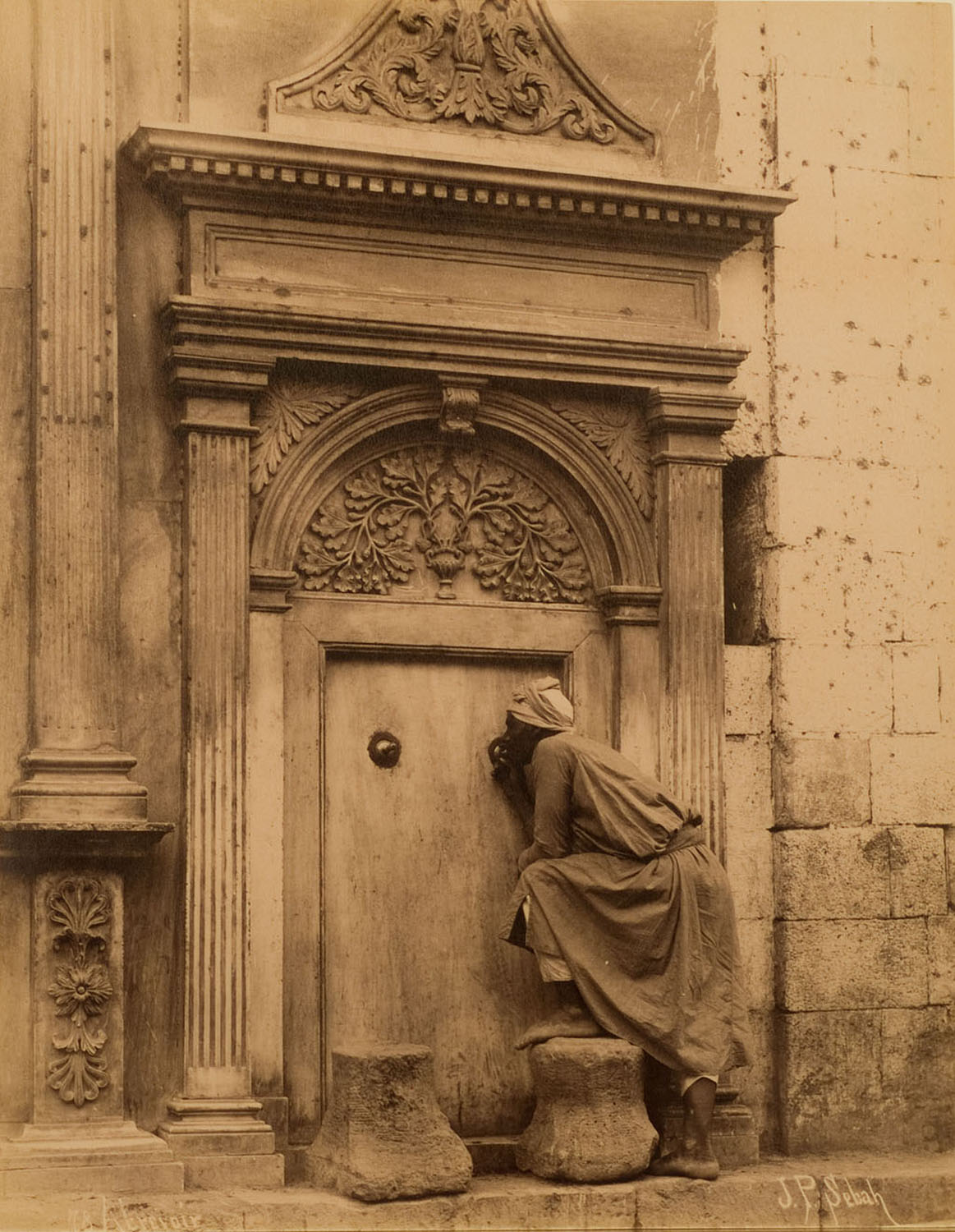
Voyeur, Egypt. J. Pascal Sebah, Late 19th century. Original photograph on albumen paper from a collodion glass negative

Still, since the collection can’t offer documentary truth, what one is left to seek is, simply, beauty: and that it has.  The images in Desert Jewels do what the best art does: they make one curious about a world possibly very different from one’s own–filled with people who look different, dress differently, walk different streets, tell different stories and worship a different god, whose whole Weltanschauung might seem utterly foreign, and yet in them one can also see occasional evidence of our commonality. It is usually in the eyes; the shrewd, calm stare of the perfume sellers, shared by anyone who has perfected the art of sizing up and selling luxuries to the less-shrewd. The stricken expression of the Ouled Nail girl, one that you can still see on the faces of young women who receive more attention from men than they want or know how to handle.
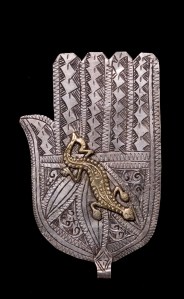
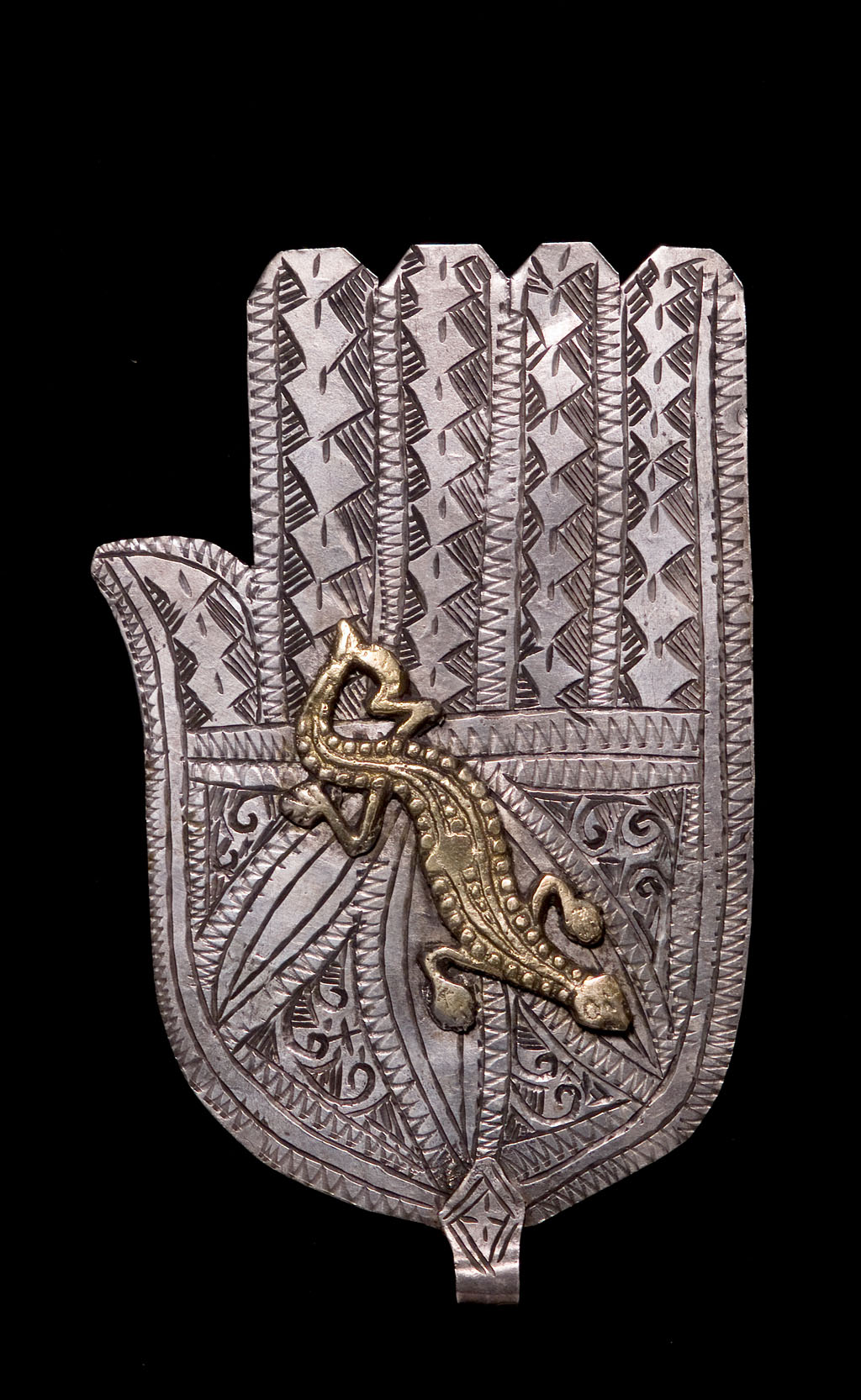
Hand pendant with salamander motif (khamsa). Morocco. 19th or 20th century. Silver, bronze

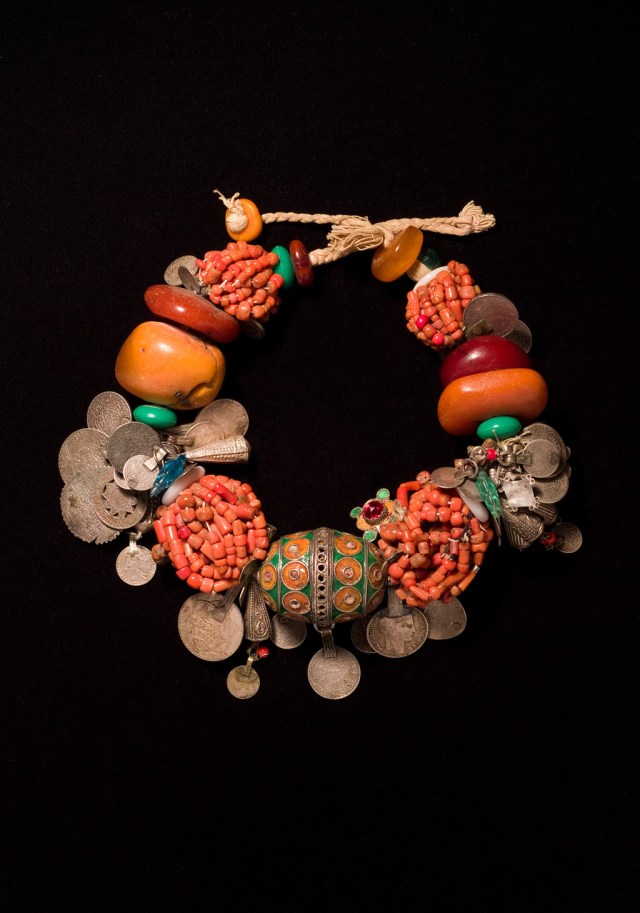
The other, flashier section of the ‘Desert Jewels” exhibit features actual jewels. Much of it is Amazigh jewelry, referring to the original inhabitants of North Africa, from the area known as Maghreb, the Arabic word for the West (the crossroads of the Middle East, sub-Saharan Africa, and Europe).  Amassed by the man whose name represents the sort of jewelry and accessories you buy when you want to show the world you have lots of money and no stylistic courage, it is interesting that his personal tastes run towards these rugged, hand-hewn, tribal objects. All of them are “big” compared to the kind of jewelry we wear, and none of them were worn alone. North Africa never got Chanel’s memo about taking one thing off before you leave the house. The amount of jewelry the average western woman would dare to wear and still worry was “too much” fell off an impoverished Tunisian girl every time she sneezed. Head ornaments, fibulae, bracelets, necklaces, belts, amulets, all carried symbolic meaning, as well as aesthetic value.
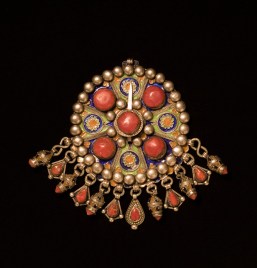
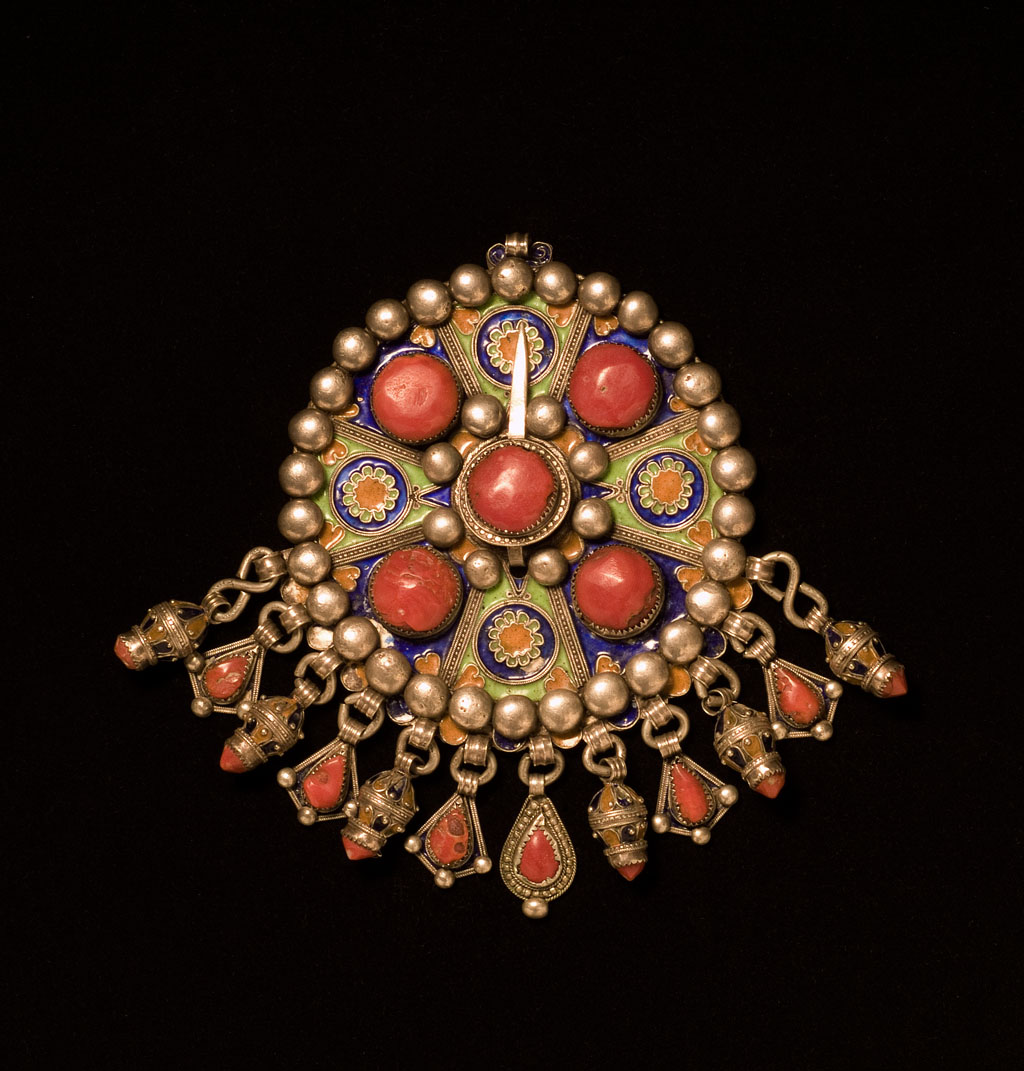
Fibula (tabzimt). Aït Yenni peoples, Great Kabylie, Algeria. Late 19th century. Silver, coral, enamel

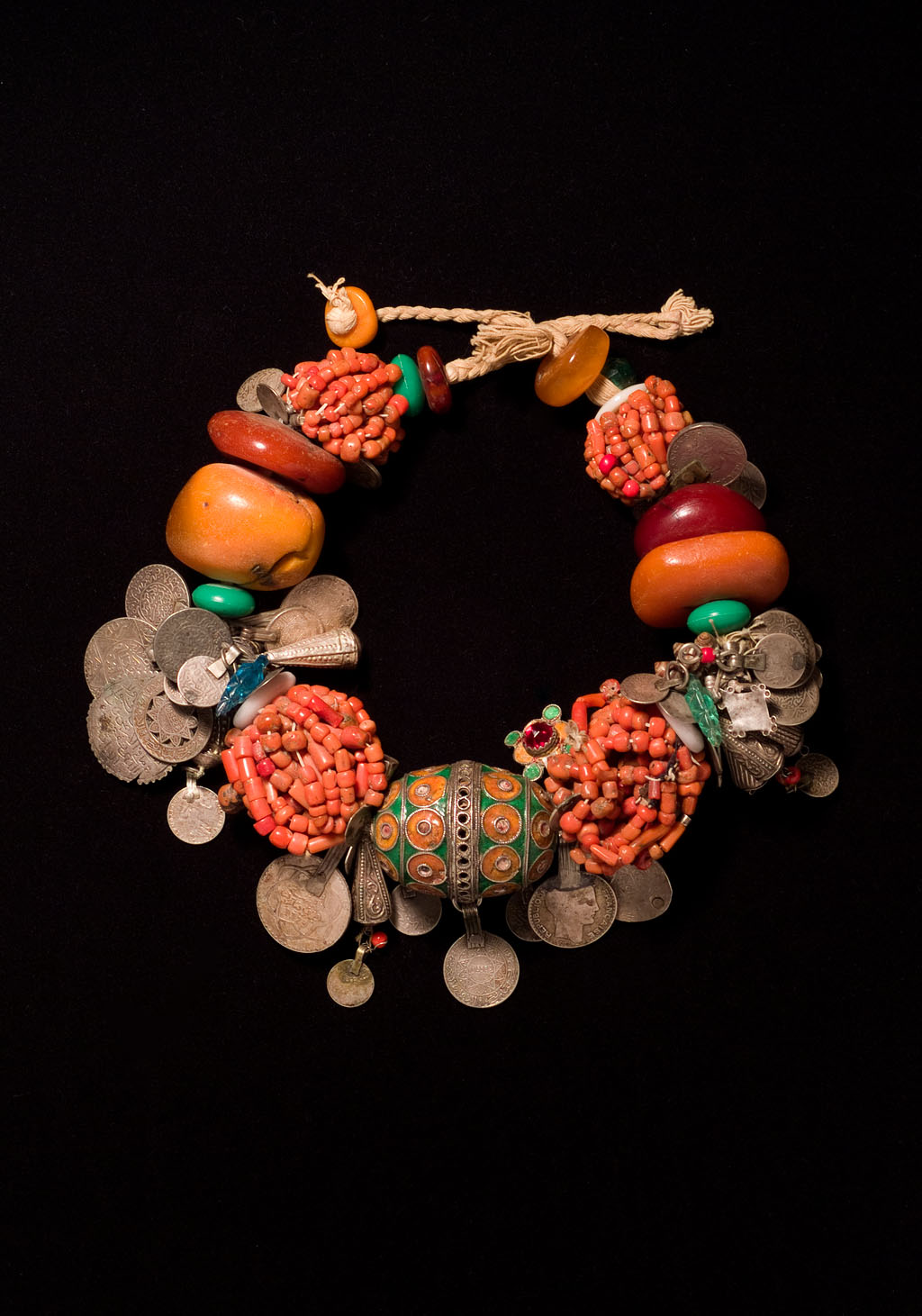
Certain shapes and materials provided protections against both outward and inner evils, such as jealousy. The hand of Fatima, or khamsa, is the most prevalent and usually includes Hebrew or Arabic inscriptions. The striking thing about the collection is not only how beautiful so much of it is, but how paltry our own aesthetic seems in comparison, how timid, how full of fear–because we don’t just get to see the jewelry as disembodied objects, we see in the vintage photographs how they flatter the body, how mixing them up and wearing them all together does not, as our pedantic style gurus would say, make the look too “loud.” We see how meaningless is the phrase “less is more.” A visit to this exhibit should have a shaming effect upon anyone who has ever pared down their look in an effort towards “tastefulness.”
But you know, that little diamond heart you wear on a chain around your neck is cool, too.
Necklace with central pendant (tagguemout) – Draa Valley, Morocco. 20th century. Silver, copper, coral, enamel, coins, glass, copal, shell, cotton, plastic, buttons

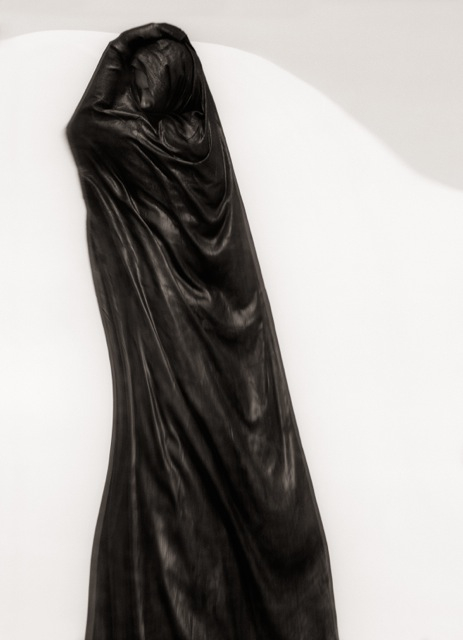
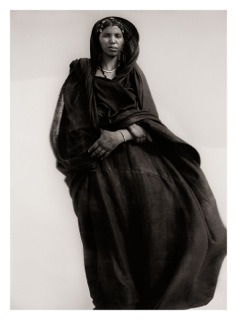
Finally, the other exhibit at the Museum of the African Diaspora is selections from local photographer Elisabeth Sunday’s monumental series “Tuareg” and “Anima”. Using a flexible mirror she created for the purpose, Sunday photographs her subjects, nomadic women from the area ranging from Algeria to Mauritania to Mali and Niger, in the act of arranging their wraps.
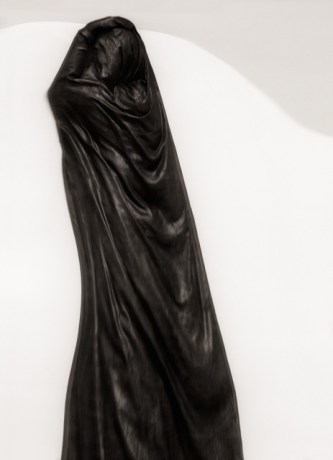
Emerge, 2007
Tuareg Woman, The Sahara Desert, Mali
Platinum Print, 25 x 30
Courtesy of Peter Fetterman Gallery, Santa Monica, CA

A sort of analog photoshop process, her method of photographing these women emphasizes and enhances their grace, elongating the body and the folds of their shawls, creating an impressionistic effect one might be used to seeing in painting but which is unexpected in a medium from which we often expect a more literal representation. The effect is closer to that of dance, in which the body has reshaped itself and learned to move in a way that proclaims and exaggerates all its best qualities, while momentarily silencing its flaws, and in which movement itself has an aesthetic, rather than merely practical, purpose. The images are stunning. Go see them.
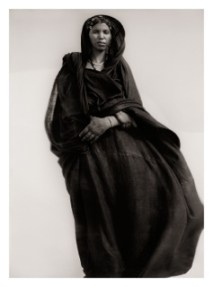
The Known, 2005, From Africa VI: Tuareg Portfolio, 2005-2009. Gold-toned silver print. Courtesy of the Peter Fetterman Gallery

Posted in ART, jewelry, photography, REVIEWS, San Francisco | Tagged , , , , , , | 1 Comment

The San Francisco Voice Center

I recently sat down with Lisa Wentz, founder of the San Francisco Voice Center and coach for public speaking and accent reduction to discuss her work. Lisa is trained in the theatre and studied in San Francisco and at London’s Central School of Speech and Drama. After watching the impressive DNC speeches I reached out to Lisa to ask her what makes a great public speaker and how a speaker might deal with nervousness and stage fright, and what one can do to work through these as a performer.

LA: What sets you apart from other speech coaches?

LW: I work from the internal to external as opposed to giving people tips on pausing, hand gestures and external shaping right away.

LA: How do you mean ‘internal’?

LW: I start with the tension patterns the speaker carries and eradicate them so the speaker can be heard fluidly and gracefully.  We work on posture, breath, alignment and identifying ‘triggers’ that may make the speaker nervous, lose track of what they are delivering, or interfere with their ability to be present and enjoy themselves while speaking to an audience.

LA: Can you give an example of a trigger?

LW: Sure, for some people it could be as simple as seeing an audience member looking bored. Or they perceive them as bored…then they begin to panic and self-criticize pulling their focus off their topic and onto themselves.

LA: How would you address this?

LW: I would advise my client to smile at the audience member, or acknowledge them in some way. To try to remember the audience is not your enemy. They are there because they want to hear you. Then I would advise my client to look around the room acknowledging other people and objects to help keep them present and focused.

LA: What qualities do you think make a great public speaker?

LW: The physicality of the speaker should be without excess tension. Tension is wasted energy that gets in our way and blocks our ability to connect with our audience. A great speaker focuses on content not on themselves…in other words whether the audience likes them or not…that simply does not matter to them.  What does matter is that they are heard loudly and clearly and that the audience understands them. You cannot control what others think of you but you can control whether or not you deliver your message in a clear, concise and meaningful way.

LA: Can you give examples of this?

LW: Sure, MLk’s speeches, clearly he did not care whether he was liked or not, his message was bigger than that…bigger than all of us quite frankly… same with JFK’s inaugural address. For a more recent example Bill Clinton’s DNC address last month was outstanding. Not just because his speech was intelligent, clear, concise, and delivered with approachable eloquence but because he enjoyed it so much. This is something that actors learn right away in their training…whatever you feel (as the character) the audience feels to some degree. If you enjoy speaking the audience will enjoy it too. And very few people enjoy public speaking more than Bill Clinton.

LA: What kind of clients do you like to work with?

LW: I enjoy working with people from all sorts of backgrounds. I like coaching speeches, presentations, accent reduction, and working with actors…I really find every aspect of my field fascinating.

Posted in classes/workshops, Interviews, theatre | Tagged , , , | Leave a comment

I performed at the Opening of Opulent Temple at Burning Man 2012

another performance, at Uli Baba’s. Here I’m leading an improv with anyone who wanted to join.

I don’t only write about art; sometimes I make it. Burning Man is an incredible experience, and one that I will write about more at length when I come down from it. One of the things that is astonishing about the great desert festival is that if you visualize what you want to do there, prepare like a m*****f*****, and allow fortune to slip the silk pillow of opportunity under your hips, amazing things can happen. I attached myself to a camp with a belly dance theme, and found out that I would be leading classes and flashmobs on the Playa. I come from a dance background (my mother started the San Francisco Classic Dance Troupe and developed what would become the American Tribal Style, refined, expanded, and brought to prominence by her student and company member Carolena Nericcio’s Fat Chance Belly Dance company). Though I had studied a bit with my mom as a teenager, I hadn’t practiced this form of dance since then, but when I found out I’d be doing Burning Man, and have the responsibility of teaching and leading performances, I started studying at Fat Chance in June. In a course with four levels I’m probably a talented level two; there is a lot I don’t know and in normal circumstances it would be a while before I would start performing. But I decided to ignore my lack of qualifications and use BM as a sort of pre-Broadway run prior to my official debut, whenever that will be. Fortuitously, on my first  day in Black Rock City, while riding around the still-developing camps and getting used to the heat and dust,  I met Gina Grandi, performance organizer for the enormous Playa dance venue Opulent Temple, and an active producer in the Bay Area belly dance community. She knew who my mother was (even had a few pictures of her on her iphone) and invited me to perform at their opening, probably presuming that given my background, I was much more experienced than I was. SO two days after I arrived in the desert, I taught my first class, led my first flashmob, and performed as a dancer for the first time.

Flashmob with students in a dust storm

Later in the week I found other opportunities and venues for dancing, and had my very patient and generous camp buddies take pictures and videos, an invaluable aid for seeing what in my movements and posture I still have to work on and what I’m doing pretty damn well already according to my dispassionate and unbiased mother. Here I am at Opulent Temple; the first song is “Magreb,” performed by Helm, and the second is “Soave sia il vento” from Mozart’s Cosi fan Tutte, performed by Kiri te Kanawa, Ann Murray, and Ferruccio Furlanetto:

Posted in ART, belly dance, dance | Tagged , , , , , | 14 Comments

I interviewed Ira Glass for SF Weekly

Ira Glass, best known and adored as the creator and distinctive voice behind This American Life, is expanding his oeuvre. The long-running radio series now has six movies in production. The first is Sleepwalk with Me, based on comedian Mike Birbiglia’s autobiographical one-man show. We talked with co-writer and first-time film producer Glass prior to his appearance for the movie’s San Francisco premiere August 31.

How did your experience studying semiotics in college inform your work?

It completely changed everything for me and I use it every day in my job. Do you really want me to explain this? I totally can.

Yeah!

Semiotics is this body of narrative theory and what it’s interested in is not the old school, traditional literary theories like “What is the author’s intent? What are the themes? What does it say about the author’s life?” It has no interest in that. what semiotics is interested in is how does a story get its hooks into us and keep us watching, listening, reading, whatever. What’s keeping us moving forward? And when a story ends and is satisfying, what makes it satisfying? What does it consist of and how is that produced? And so there are all these kinds of tricks and ways of thinking about the structure of a story that I learned in college that I use all the time. The action itself can create suspense.

One of the things I learned as a young semiotics nerd was that if you have plot moving forward, no matter how banal the facts of it, simply the fact that the plot is rolling forward makes you wonder what’s going to happen next, which creates suspense. So you can control peoples’ attention simply by having things move forward in a story. That’s why when we start [This American Life] we just start with some anecdote, a story. Because I feel like it pulls people in better than listing what’s coming in the upcoming hour.

In “On storytelling,” there’s a blurb that was taken out of it and which made the rounds on the Internet for a while, where you talk about how you have to have patience to allow your practice to catch up to your taste. You start out with great taste but lousy practice …That video series was insane; somebody showed up one day from Current TV, I think, and wanted to do these training tapes for people on how to tell a story and was like, “Talk!” So I did, and I feel like I’m more famous for those videos than I am for my actual work.

That happens I guess. Well, you used this audio clip of your reporting from when you were about 28 and there is some obvious roughness to it, strange vocal inflections …

And the writing is terrible and the structure of it is terrible and the entire thinking through of how to do it is terrible. Not just the execution, the premise. (continue reading)

Posted in damn good, Interviews | Tagged , , , , , | Leave a comment

My “Best of 2012” arts round-up, Art Practical

photo by Kylin Idora

As futile as it is to try to sum up the best arts events a cosmopolitan city like San Francisco offered in a year, especially with a mere 1200 word-count, I gave it a try for Art Practical. I settled on two photography exhibits, one by a legend (Lee Friedlander) and one by a future-legend (Chris McCaw), a burlesque show by the great Dita Von Teese (whom I interviewed here), and a new ballet, Francesca da Rimini. How I wanted to wax long-winded about the stunning Gaultier fashion exhibit at the De Young, Alvin Ailey American Dance Theater’s visit to Berkeley, Reborning and Honey Brown Eyes at the San Francisco Playhouse, Renée Fleming’s Lucrezia Borgia at San Francisco Opera, or SFMOMA’s Francesca Woodman retrospective! But outside forces of shindig-shittery limit my ramblings. This is probably for the best. You can thank my editors.

On Dita Von Teese’s “Strip, Strip, Hooray!” at The Fillmore: She doesn’t appear concerned about pleasing her audience at all, just calmly confident that she indeed does. Von Teese’s prowess hinges on the iciness of her stage persona, the discipline of her stillness, the sense that no matter how few and tiny the vestments she stripped to, she was withholding far more than she gave. And so the kind of foot-stomping frenzy that other dancers that night had to give their all for, Von Teese inspired with the simple act of undoing a single button. 

On Lee Friedlander’s “Mannequin” at Fraenkel Gallery: Both wear the sort of underthings you wouldn’t actually wear under anything; one presents a stockinged leg, the other, a paddle. They both stare suggestively outwards but, seen from a street that’s empty except for a few parked cars reflected in the windowpane, what was intended to be an enticing scene transmogrifies into a comedy of misfortune: All dressed up and no one to spank.

San Francisco Ballet in Possokhov’s Francesca da Rimini (© Erik Tomasson)

On San Francisco Ballet’s Francesca da Rimini: Possokhov…infused the lovers’ pas de deux with opposing tugs of intense erotic attraction and the acute revulsion of the conscience-stricken. With each movement, their bodies simultaneously expressed conflicting emotions and appetites, creating a psychologically complex, rapid-fire physical dialogue that was both beautiful and challenging to watch. In one moment, the reckless sweep of a leg said one thing while the rigid back and tortured face said something else entirely. 

On Chris McCaw’s “Ride into the Sun” at Wirtz Gallery: But the resulting image is more than a failure of the representational function we expect from photography. The arcs seared through the photo paper connote the passage of time, proclaim the physicality of photography’s seminal processes, and add a tinge of violence, a brutal grace to the dark, still gorgeousness of McCaw’s landscapes. (continue reading)

Posted in ART, ballet, burlesque, damn good, dance, photography, REVIEWS, San Francisco | Tagged , , , , , , , , , , , , , | 1 Comment