Pina Bausch’s Le Sacre du Printemps

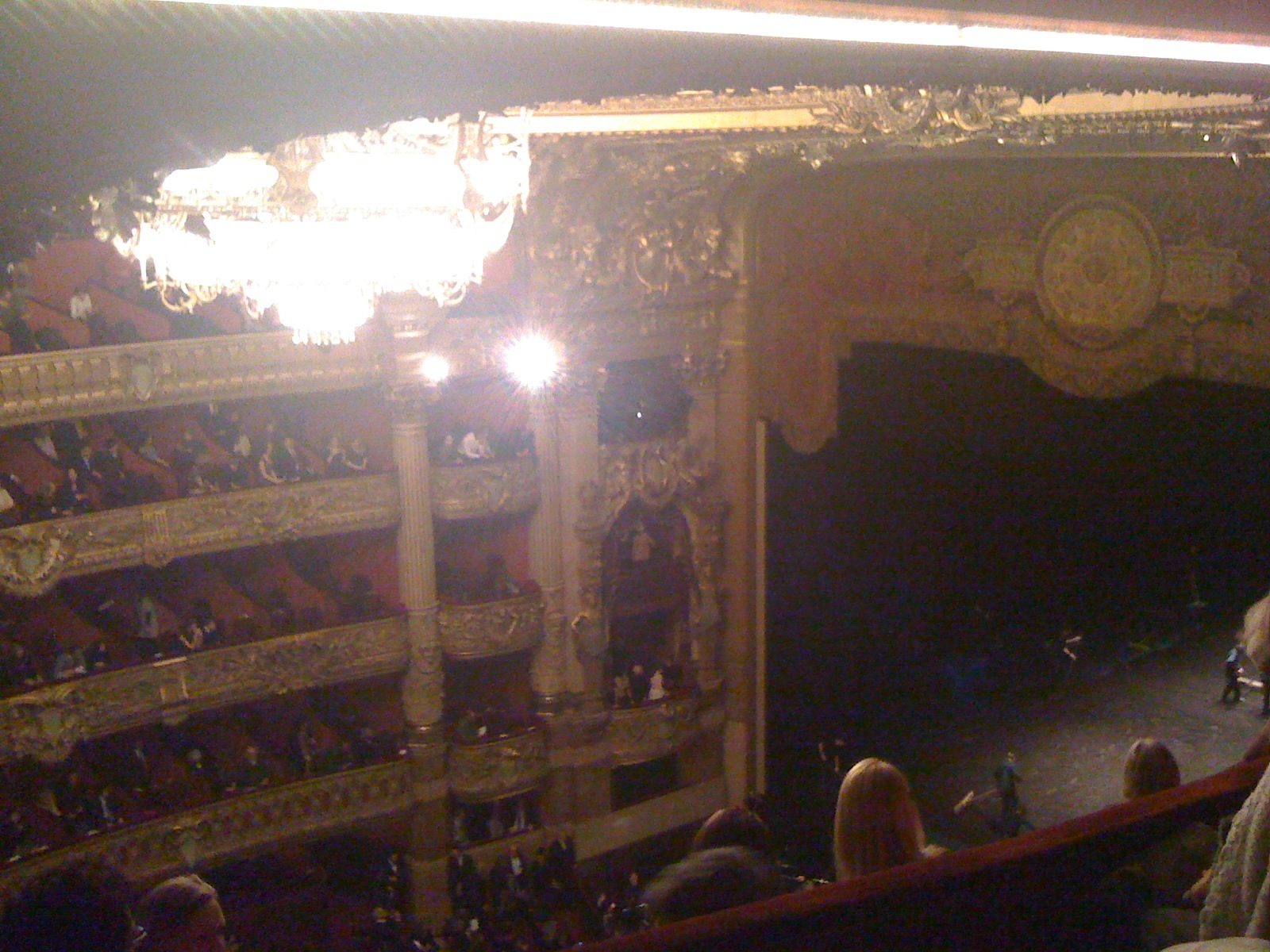
I managed to get a ticket to the New Year’s Eve performance at Paris Opera’s Palais Garnier of a modern triple-bill, the piece of most interest to me being Le Sacre du Printemps. Over the phone (at 35 centimes a minute), I was told that the house was completely sold out, but I figured it was worth a try to visit the box office the night of the performance to check for cancellations. There I was told that there were no cancellations but that for 35 euros I could buy a ticket for a seat in which, if I sat, my view of the stage would be completely obscured but if I stood up, I could see perfectly, and since there was no one behind me, I could do that (equivalent seats at Covent Garden go for a quarter of the price but wotevs). I was shown to my seat as the lights went down, the fourth seat in a loge in the upper balcony with a three-quarters view of the stage. My chair had a tote bag in it, and when none of the three other patrons cramped together offered to move it, I picked it up to put it on the floor, at which point the woman in front turned around, grabbed and replaced the bag, then wagged her finger at me. In the darkness I pointed to my ticket and back to the chair, and she responded again with her finger. When I whispered, “This is my seat; I have a ticket for this seat—please move your bag!!” (I didn’t even bother trying to speak French at this point), the man next to her shout-whispered,

“Bee Kwaiaytte!! SHOEUT OEUP!!”

“This is MY SEAT; I HAVE A TICKET”

“SHOEUT OEUP RRAIT NAWW!!”

Apollo is a quieter work for Stravinsky, composed entirely for strings, and so I stomped off in my boots across the noisy wooden floors with the rest of the gallery shoeusheeng me over its gentle opening chords and let the heavy brass door clank shut behind me. After much cajoling, the usher agreed to help me defend my place, but only if I agreed to be verree, verree kwaiaytte. She then realized that she had shown me to the wrong seat (merde alors!) , and that my ticket was in fact for a seat at the far end of the horseshoe-shaped gallery, acutely angled to the stage. I couldn’t see sitting or standing, so I did what most of the people in the ‘gods’ did; I moved over to stand as close to the wall separating the side loges from the central loges as I could. Standing there I could see a little more than half the stage, which I figured was better than being kicked out of the Palais Garnier. I didn’t understand all the commotion over my making noise, however. The upper balconies were pretty noisy. People were talking, walking in and out, burping babies, necking, and openly videotaping the performance. I’ve never had a very strict attitude about audience decorum, except with regard to crinkling candy wrappers and open drunkenness, so I didn’t mind the Freihaus atmosphere of the place, although I did mind that it smelled like a toilet. My visit to the Grand Ballroom during intermission, however, confirmed that the stench pervaded even the high-ticket areas. I feel it’s worth noting that though the Paris Opera might follow dubious standards in bathroom hygiene, they do serve champagne, finger-sandwiches, and petits-fours at intermission, something I have yet to enjoy at Lincoln Center.

I want to talk about Pina Bausch’s Le Sacre du Printemps. I was not familiar with this version before that night. It’s a striking work, which gets certain themes across brilliantly—fear, desperation, the horrific injustices human beings inflict on one another in times of misery. But it doesn’t quite match the big, bad original in several, I think, major ways. This is the opening of Nijinsky’s version, originally created for the Ballets Russes:

Nijinsky’s work first tells the story very clearly. At the first lonely, lovely, cadence from the bassoon, the lights rise on people huddled in clusters on the ground. Slowly they arise and stretch, as if out of hibernation. It is the onset of Spring, and the people begin to beat the earth and reach out to the sky, a prayer for abundance. Rival tribes skirmish. The village elder examines the sky for omens. In part 2, the lights rise on the village maidens already engaged in a synchronized, repetitive dance, as if they have been doing this all night. One maiden collapses three times. She is the weakest, the “Chosen One.” She is isolated and forced to perform a frantic, strenuous dance that ends in her death. She is hoisted towards the sky as an offering to the sun-god.

This is the great Beatriz Rodriguez as the Chosen One, in Joffrey Ballet’s recreation of Nijinsky’s original.

In Bausch’s version, I couldn’t figure out how or why the Chosen One is, well, chosen. I have embedded videos of this version below. The piece opens with a single woman, apparently in some pleasant, maybe vaguely erotic reverie on a red cloth laid out on a stage covered in dirt. Slowly other women emerge from the wings; some rush to a point and stop, others meander, or do slow-motion pliés in the dirt. One can’t really tell what any of them are up to. As the music swells and gets more complicated symphonically, the womens’ movements become more spastic and more stereotypically “modern dance” in effect—they flail their arms and kick at the air, jerk their heads and stare, and it is as yet unclear what their agitation signifies. Is this Spring’s reinvigoration of the earth and people? Is it civil unrest? Is it growing hysteria, heralded by the clarinet verging on overblow in video 1, 2:42? I can’t tell, but that’s not a problem for me—yet. As whatever is happening pans out, the woman who had been asleep on the red cloth wakes from her reverie, and shudders at the realization she is holding this red cloth, which, in a scene entirely in brown and nude, stands out as an obvious, ominous, symbol. The women seem repelled and frightened by the cloth dropped downstage left, and for the first time dance in unison (video 1, 3:45). Also for the first time, there is a sensible (to me, at least) tone to their movements: they beat themselves, hunch their backs, squat and lurch clumsily. It seems more like strenuous manual labor than dance. The dirt from the ground sticks to their skin as they sweat; their hair gets more and more disheveled. They begin to seem less like dancers in delicate flesh-colored gauze slips than like half-naked self-flagellating automatons. One dancer breaks away from the group and shakes, doubling over at the abdomen, suggesting enteric distress (video 1, 4:44). Are these people starving? However, the real menace arrives in the forms of the men, appearing at (5:05)—from the time they arrive onstage it is clear that in this society (if it is indeed a society in the literal sense that is being portrayed here) men have total mental and physical power over the women. They charge onstage and the women suddenly disperse and stare at the floor, looking guilty, and like they hope not to be noticed. The mens’ movements are sharp, athletic, expansive; women cower before them, and seem even more naked in their sheer dresses. The women start to play “hot potato” with the red cloth, which almost makes sense if the red cloth represents the death sentence one expects it to based on both familiarity with the traditional story and on the horror with which it has heretofore been regarded in this version—but at one point a woman grabs the cloth out of the dirt and dances with it. Wait a minute–if the cloth is, say, ‘death,’—like “The Lottery”’s cross-marked ticket, and the women all understandably recoil from it, as they have from its revelation, why does she do that. The men grow more abusive, dragging women across the stage and crowding like wolf packs around the isolated ones. This dynamic persists throughout the rest of the piece, until the choosing of the sacrificial victim, in which each woman, trembling and clutching the red cloth to her breast, approaches what might be some sort of priest or elder (video 3, 4:15), as if to ask whether she is the one who must enact the terrible ritual. Finally the priest ‘chooses’ one (video 3, 5:24), and dresses her in the red cloth, which is in fact a loose-fitting slip. Perhaps it makes sense that a modern female choreographer chose to insert and emphasize an element of male-on-female control and abuse into a story that had heretofore been about something different, but I think it detracts from the main theme of this piece, and the one that this piece can express so well: the power of the group over the individual. You can diffuse that theme with stuff about subjugation of one whole gender by the other, but why would you?

Nijinksy’s original portrays the terrifying Darwinian imperative we arose from: the weakest of the lot is destroyed without mercy or sentimentality. Bausch’s piece hints at various forms of wretchedness (starvation, fear, oppression, displacement–at one point (video 2, opening), all the dancers plod in a circle suggesting a sort of Trail of Tears-style mass exodus—but who can tell what’s going on, really?).

In Nijinksy’s work, on the other hand, the people don’t seem too troubled by anything. Their faces are placid, their movements exact, they are elaborately dressed and made-up and seem healthy, if emotionless. We get the impression that ritual human sacrifice is just these people’s idea of how to keep on keepin’ on. You could easily mistake this society for a fairly civilized one until you realize what they’re on about. It reminds me of the contradictions of ancient Rome—they were so advanced in so many ways, yet eviscerations were their Jersey Shore. There is no hint of any soul-searching, or indeed, of the concept of “soul.” The only fear we see is in the shaking knees of the “Chosen One” after she is chosen: she is the only one who conveys anything we would recognize as human emotion, and she only does that after she has been isolated from the group, the implication being that what we know as “feeling” is a luxury one can only enjoy, or suffer, if isolation from “the group” (or “mob” or “society” or what have you) is not in itself a death sentence. For all this people’s apparent sophistication—they wear clothes, they farm, they organize rituals and pray—they still live like animals of prey. Only the weak separate from the herd and so must die.

My point is that it is less terrifying to see the horrific things human beings do to one another in times of misery than it is too see them doing the same things as mundanities. But I suppose anterior to that, my dissatisfaction with the piece stems from resentment at not being able to tell what is happening on a superficial level, not being able to follow the story or deduce whether there even is a story. If a piece is entirely abstract, then one can give oneself over to be moved by whatever emotions or ideas those abstractions elicit. But if there is a storyline, or even a suggestion of a story, it should be made clear enough to allow us to focus, both intellectually and emotionally, on the themes, on the heightened vision of ourselves that dance can show us, the stuff that’s both higher and more profound than plot. One can’t give oneself over to be moved by portrayals of human experience while simultaneously trying to sort out what that experience is.

I’ve linked to high-quality videos of Tanztheater Wuppertal’s 1978 recording of the piece. Of course the dancers I saw at Paris Opera were slimmer and longer-limbed, but the choreography speaks for itself, and Bausch does choreograph for a diversity of both body type and technique.

Posted in ART, ballet, damn good, dance, my travels, Paris, REVIEWS, rude french people | Tagged , , , , , , | Leave a comment

Presenting….

The Photography of …
By Larissa Archer

Posted in Uncategorized | 1 Comment

On the rechristening of Henry Miller’s Theater *update*

(I posted this as a note on my facebook page and got some interesting comments; I’ve included them here in the comments section below)

Sometimes I have to agree with Christopher Isherwood. There have been some stupid, crass, and embarrassing decisions made in the renaming of certain Broadway theaters. The renaming of the Plymouth and the Royale theaters after bureaucrats would be the worst examples if there weren’t also a Broadway house named for an airline company nobody even likes to fly with. Henry Miller’s Theater was rechristened The Stephen Sondheim Theater the other night. This choice isn’t as bad as the first ones described here, but it is still an inappropriate one, and here’s why:


There’s no Broadway theatre yet named for either Arthur Miller or Tennessee Williams. Now, no matter how much Sondheim lovers love Sondheim, they cannot make a case for him having as great an influence over American cultural life as Williams or Miller. This is not a polemic on the quality of Sondheim’s work; I wouldn’t presume to be able to speak intelligently on the subject, and I have too many sensitive song-and-dance friends who would pout if I did. However, I don’t know anyone who isn’t already a musical theatre enthusiast who knows or cares either way about Sondheim or his musicals. But every American reads Death of a Salesman and A Streetcar Named Desire in school, and there is a reason for that. The influence of these writers and the importance of what they had to say extends beyond the realm of Theatre (where, aside from that Johnny Depp film, and a few episodes of Topper, Sondheim’s influence stops), into that of literature and even the way Americans see themselves. In fact, Arthur Miller reworked the basic formula for tragedy, which had not been tinkered with for over three thousand years, to state that “the common man is as apt a subject for tragedy in its highest sense as kings were.” The “heroic attack on life,” which from the birth of drama had been the exclusive domain of kings and gods, Miller imparted to the unknown, laboring, “small” man—the Willy Lomans, Eddie Carbones, and John Proctors of the world. In his essay, “Tragedy and the Common Man,” Miller writes,

“I think the tragic feeling is evoked in us when we are in the presence of a character who is ready to lay down his life, if need be, to secure one thing–his sense of personal dignity…. the fateful wound from which the inevitable events spiral is the wound of indignity, and its dominant force is indignation. Tragedy, then, is the consequence of a man’s total compulsion to evaluate himself justly. In the sense of having been initiated by the hero himself, the tale always reveals what has been called his “tragic flaw,” a failing that is not peculiar to grand or elevated characters. Nor is it necessarily a weakness. The flaw, or crack in the character, is really nothing–and need be nothing–but his inherent unwillingness to remain passive in the face of what he conceives to be a challenge to his dignity, his image of his rightful status.”

If it seems strange that that there were ever a question that this “compulsion to evaluate himself justly” is a universal, classless compulsion that drama must portray if it is to reflect the human condition accurately, it is because Miller had the insight to write a tragedy in the high tradition centered not on a king or a prince but on a traveling salesman. Drama has not been the same since.

How often does someone rework something that the ancient Greeks came up with and change it for the better? Not often. But Arthur Miller did. And with it, the way we think about heroism, fate, and the mirage of the American Dream.

We can take for granted that Sondheim changed, revolutionized, even, the musical both stylistically with his non-linear plots (which Miller also did first with After the Fall) and thematically in his divergence from the usual bright fare to darker, more introspective themes (which straight theatre had been doing for, again, several thousand years). But that says more about the musical as being a still-young art form, and about Sondheim’s great influence in helping it catch up with the other arts, than it does about him as an artistic force on the level of artists whose influence does what art should do, that is, change not only the mores and structures of its own genre, but of the society and culture that produced and witnessed it. If you write a book about the Chicago meatpacking industry, and the President of the United States reads it, throws his breakfast sausage out the window, and rallies his administration to create what eventually becomes the Pure Food and Drug Act of 1906, you have changed culture you live in, maybe even the world. If you create a character who personifies sensitivity, frailty, even spirituality, and place her in a losing match with one personifying brutality, pragmatism, and profanity, you’re holding a mirror up to a society in which those very forces are vying for primacy, and hopefully, inspiring people to guard as well they can what’s sensitive, frail, and sacred. If you write a play that makes not only Americans but people all over the world question the “American Dream” and the moral, human value of the characteristics that help one achieve success in a cold, inhuman, and corrupt system, you change the way people think about their own dreams and eventually, hopefully, how they will act. You have, in a way, changed the world. If you write a musical and it changes musicals, you haven’t changed the world; you’ve just changed musicals. Which warrants a name on a marquee, changing musicals or changing the way America thinks?

Posted in New York, REVIEWS, theatre | 5 Comments

Paris, comme il faut.

under the great Parisian sky…


La Colosse

I write my postcards at Cafe de Flore.

my favorite.

With French-Syrian poet Maram al-Masri, whose latest book, Je Te Menace d’une Colombe Blanche, I translated for her recent American reading tour…
9WNG58NR6QKK

Posted in my travels | Leave a comment


Sue Bayliss, Arthur Miller’s All My Sons

Posted in theatre | 1 Comment

another nice review

in The Examiner.

Posted in theatre | 3 Comments

Suddenly Last Summer


I haven’t had much time to write or brain to think, but the show is going nicely, maybe. The director shows up once in a while to deliver some catastrophic notes which we do our best to assimilate the next night. We’ve gotten favorable reviews, here, here, and of course it’s very gratifying to hear from happy audience members, some of whom reviewed the show on the site where they bought tickets, here. I’ve even run into people on the street who recognized me from the show and said some very kind things. Unfortunately the Chronicle only reviews smaller theaters when they produce a new play, or a west coast premier.
Still, one never really feels like one got it. Luckily, we’ve extended the run by two weeks, so I still have a while…

Posted in theatre | Leave a comment

My Early 30th B-Day Party

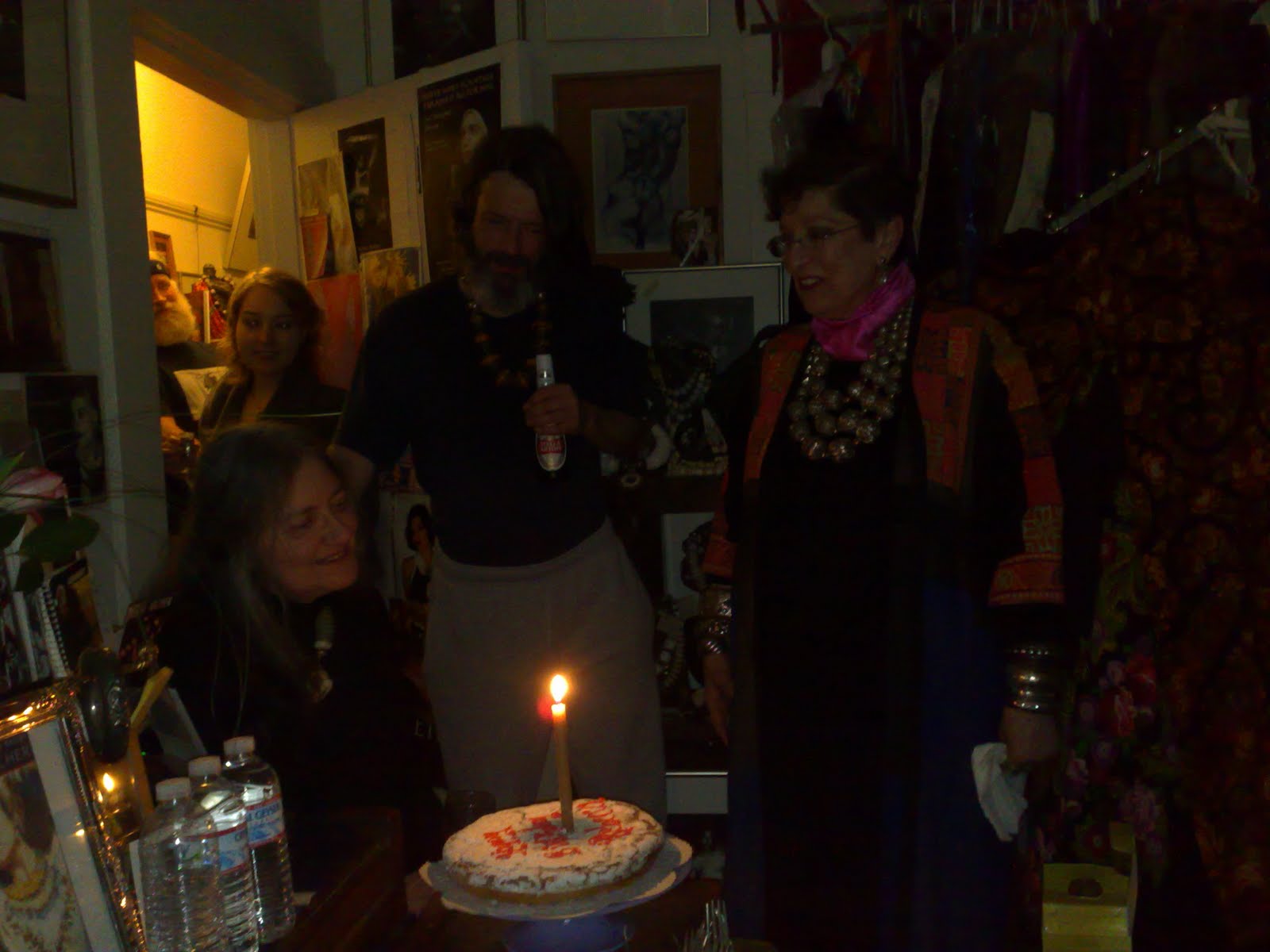
My mom and I threw one of our famous grove street parties for my 30th birthday, even though my actual birthday is not until the 24th. My original plan was to return to New York after the holidays and have my birthday there, and so we had to get the party in early if I wanted one at home. As it turns out, while I was here I auditioned for and won the role of Catherine in a production of Suddenly Last Summer, so I’ll be staying a while longer anyway. Here I’m wearing a pearl necklace my mother made for me as a gift.
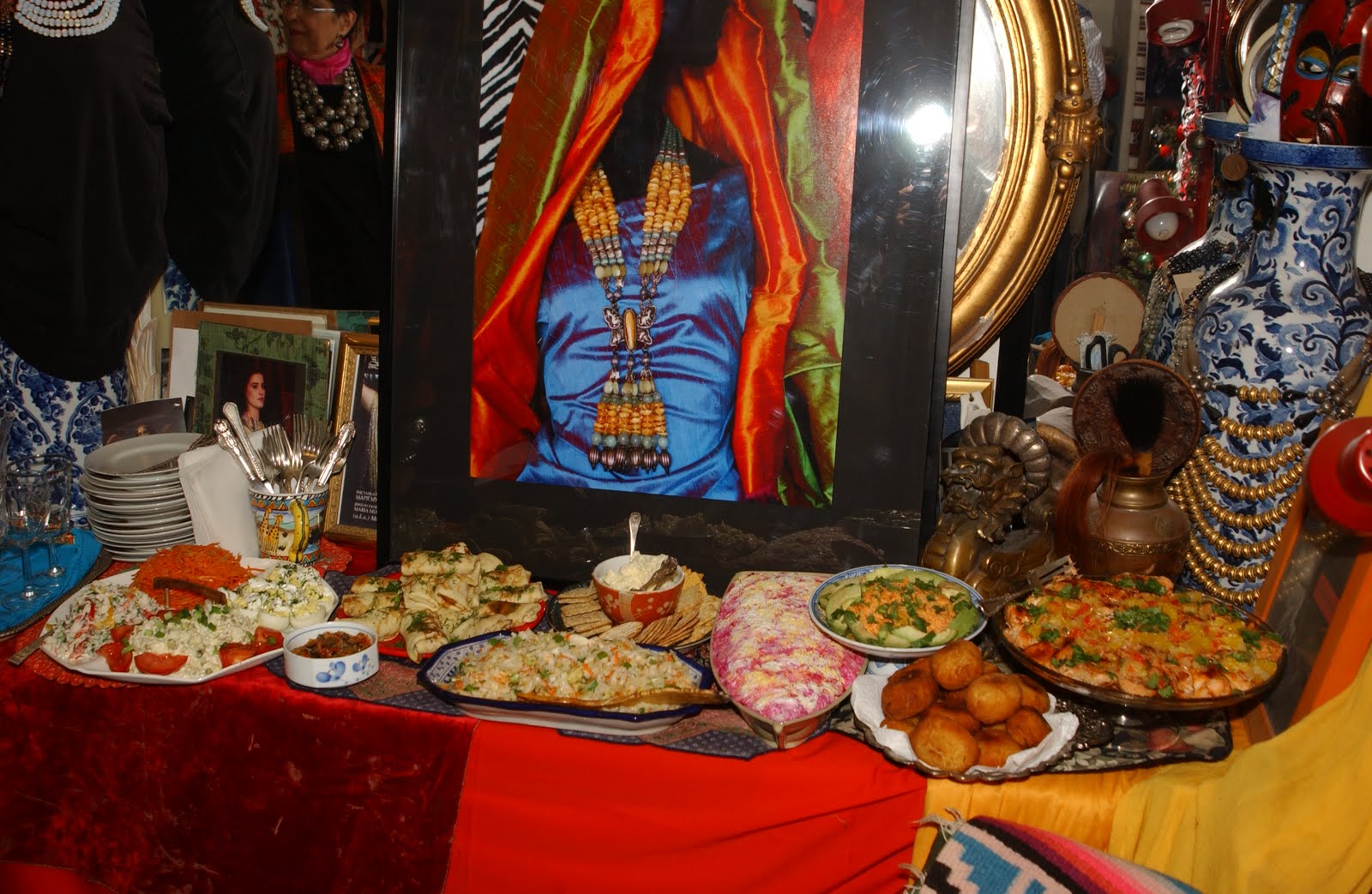
We really went too far with the food, as most of my Russian friends contributed dishes. We had steamed baby potatos with cream and herring, piroshki, caviar blinii, “herring in a fur coat” which is the pinkish boat-shaped dish above, a delicious herring and beet concoction, my own top-secret world-famous cured salmon on cream cheese and bread (this salmon is the only food I know how to prepare besides spaghetti and cereal, and I think it is enough), deviled eggs, two different Georgian garlic-aubergine dishes, potatoes Olivier (this is some sort of Russian potato salad and I still don’t know its connection to Laurence Olivier), shredded sweet carrot salad, homemade buttermilk cheese (the other thing I forgot I know how to make) which we spread on crackers with kim chee, a Russian super-garlicky cheese which we spread on anything we could find, and a Dianda’s rum cake the size of Utah. Our friend Robert brought homemade Kahlua and there was lots and lots of vodka.
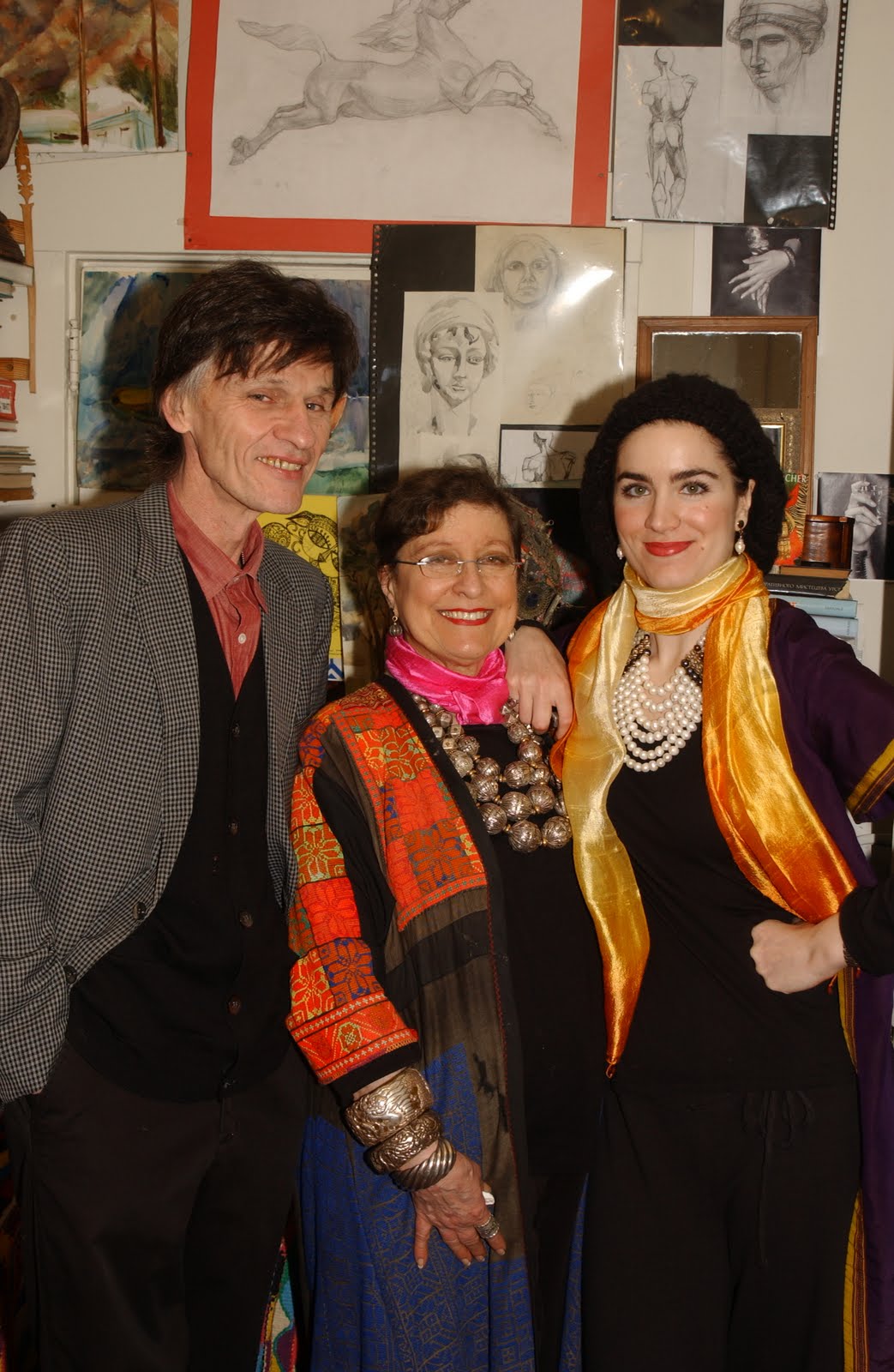
My brother-in-law, Bill, my mom, and I. We’re standing in front of a bunch of my drawings and watercolors from my artschool days, as well as a photo from my short-lived career as a hand model…
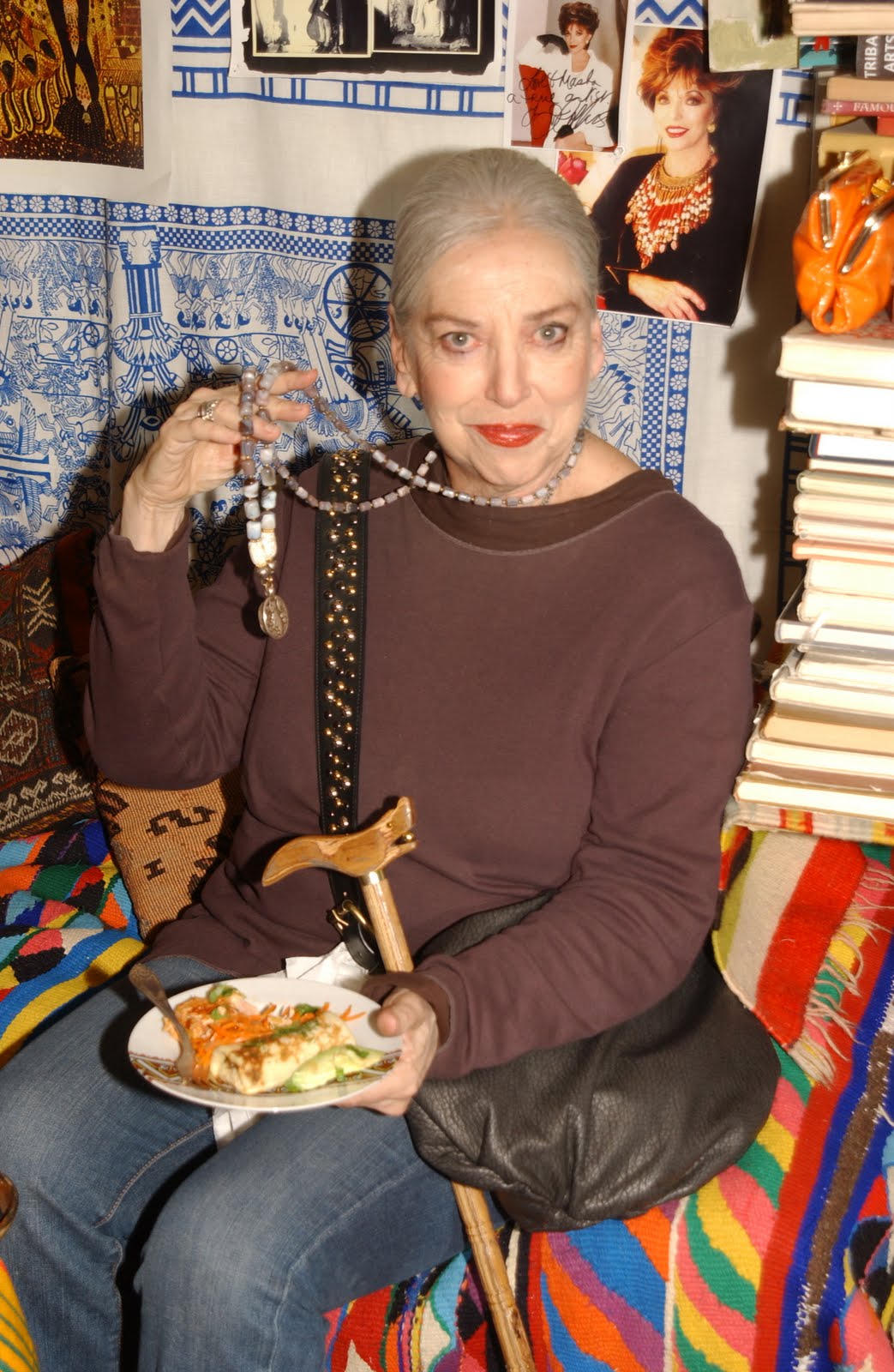
Our dear family friend Lisa Boyle, who’s known me since mom was preggers. She was an opera singer in her day, and was once conducted by Stravinsky himself (the premiere of The Flood, which, curiously, took place in Santa Fe).
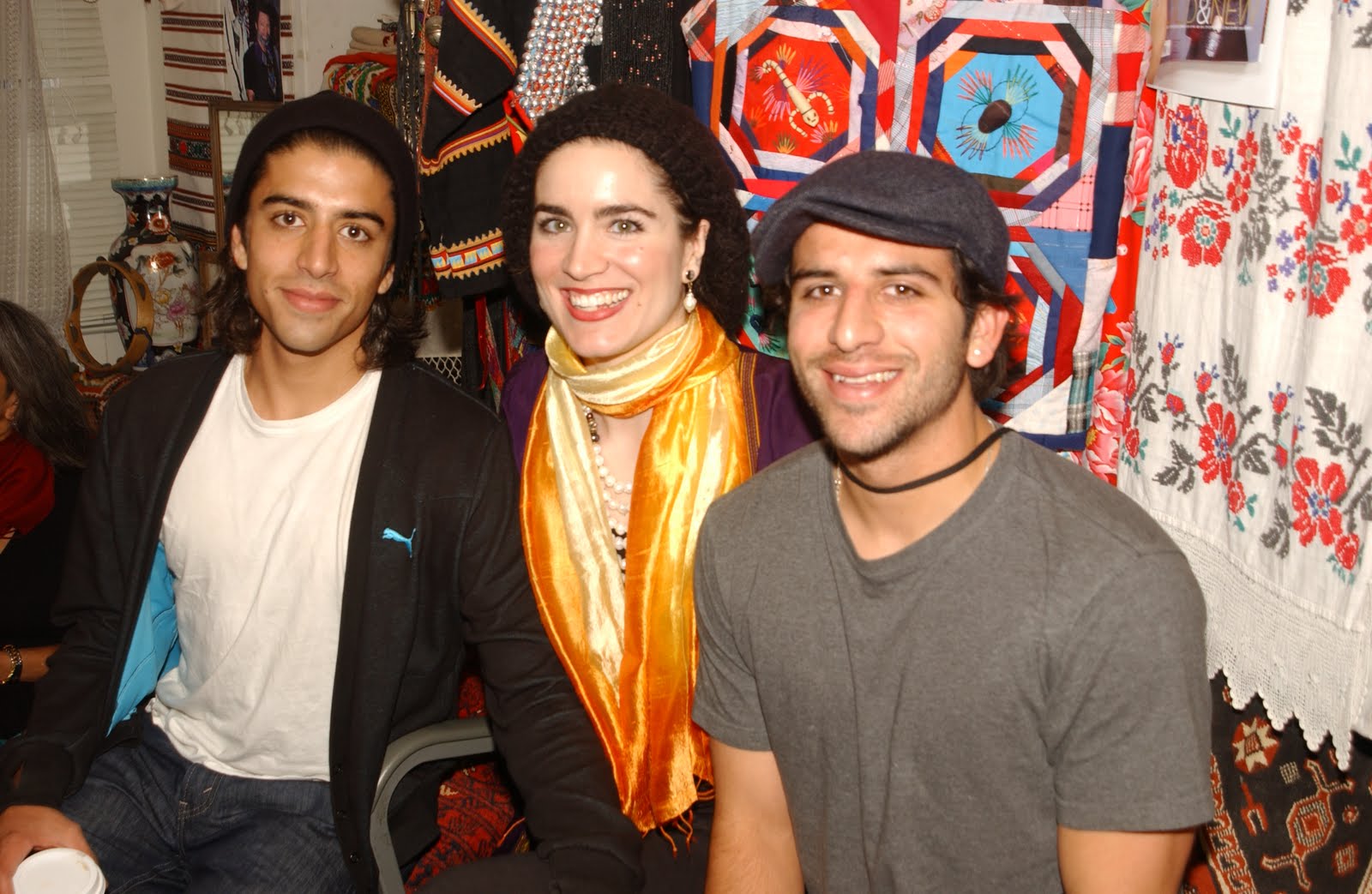
Me with Shea and Liam Wahab, sons of family friend Afreen. I’ve known them all their lives and embarrassed them heavily at my party by telling a story about them from when they were wee ones. Afreen held my father’s wake at her house, an enormous gift to us for which I’ve never thanked her properly. At the time, I felt pretty down for obvious reasons, but also because I’ve never had much patience for the sort of palliative talk that goes on at such events. All the “I can feel his presence,” “he’s in a better place,” and “he’ll always be with you” platitudes were not having the intended assuasive effect on me, and I had had a difficult time all night not punching the wall or tearing my hair out. At the end of the evening, everyone had left and Afreen sat down to talk with me. I knew she was laboring to comfort me, and I didn’t want her to labor; it was a futile effort, and the thing that mattered was that she cared, which I already knew. So although I knew she was just being lovely and caring, listening to her I just grew more tense and unhappy. I wished something might come along to break the solemnity of it all, and suddenly, Shea and Liam, both small children then, rushed in from their bedroom wearing only their pajama tops. They glanced at each other, I guess to get the starting note, and, in unison, started flicking their little things and shouting “Boing! Boing! Boing!” Afreen shreiked and chased them back into their room, leaving me laughing on the floor. It was definitely the best moment of the wake.
HAHAHAHA! That’s my sister Maya in the foreground. Nicola, a high school friend to the left, and Steve and Anson further back, both of whom I haven’t seen in nearly twenty years. We went to elementary school together and lost touch when we all moved on to middle school. We reconnected thanks to facebook. Anson’s girlfriend Lac sits to his left.
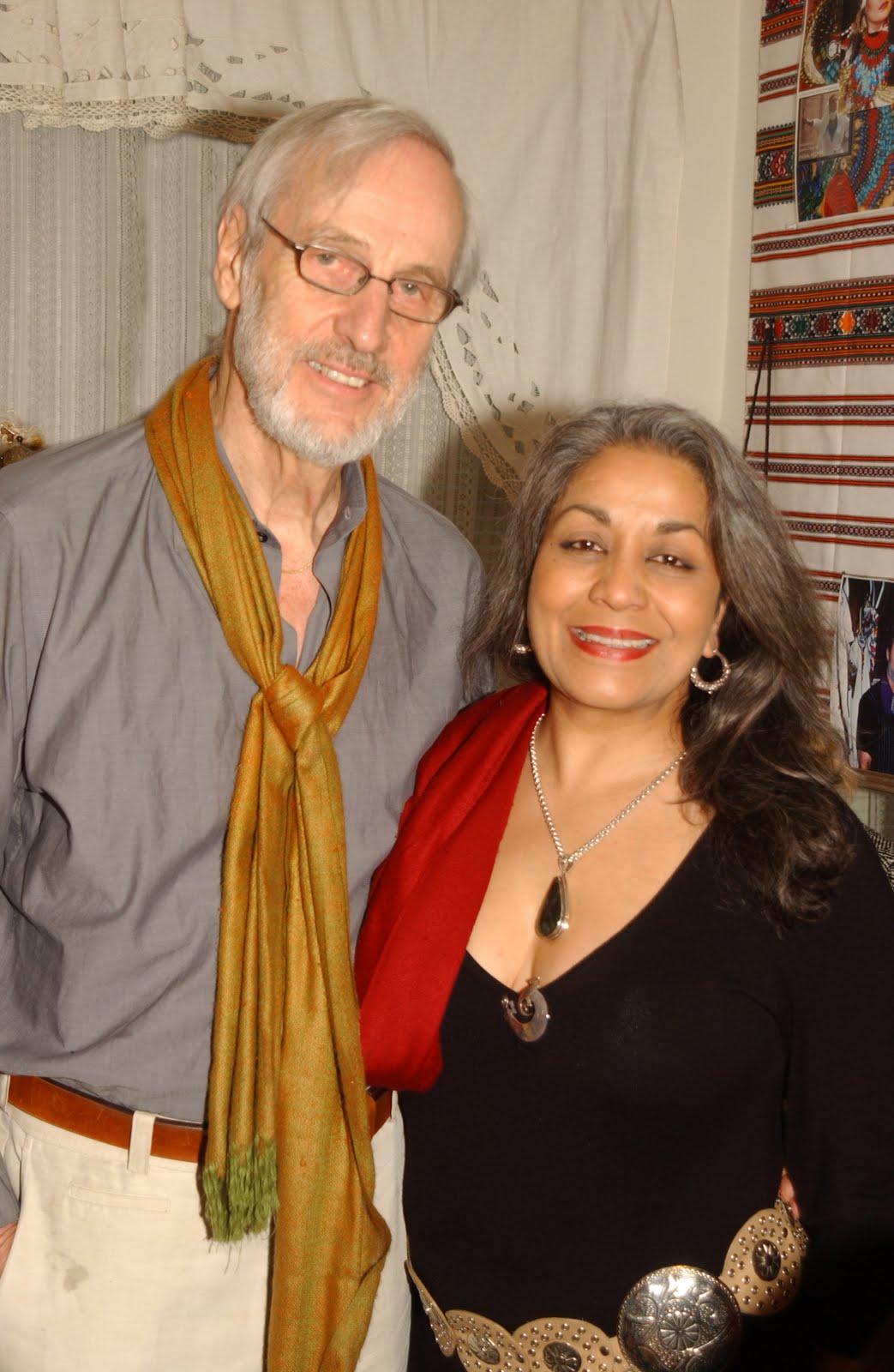
Afreen, the mother of Liam and Shea, and her boyfriend Hartmund. People who have seen my book will recognize her from several of the photographs in it. She was one of my father’s favorite models.
We had a mini-celebration for Rebecca’s birthday, which is close to mine. Rebecca has known me all my life, having danced in my mother’s troupe in the seventies and eighties. Another of my father’s favorite models.
Me with Rachel, a dear friend from the theatre, and a great actress who’s currently doing a smashing job of Martha in Who’s Afraid of Virginia Woolf?.
My sister Maya and her husband of twelve years, Bill. Disgustingly in love with each other.

Posted in Uncategorized | 7 Comments

Grove Street

In the eighties and early nineties, Grove Street was not part of “Hayes Valley,” as it’s known now, but of “the western addition,” a neighborhood built west of the original town of San Francisco on the east bay as it expanded after the gold rush, and before it stretched all the way to the Pacific. Sometime in the myopic sixties, the rows of Victorian houses on Grove, Laguna, Fulton, and McAllister were destroyed and housing projects built in their place. One of these became the “Pink Palace,” an infamous, and pink, hotbed of gang crime and violence. One didn’t walk past it alone; in broad daylight, joggers had been dragged inside, raped and killed. Once even, police arrested a man there and brought him in handcuffs to their car, only to lose him to a rioting mob of Pink Palacites who dragged him from the car and back into the Palace, leaving the car, and the policemen, on their sides in the street. This incident terrified the city so much that the government soon after tore down the Palace and transferred its occupants to somewhere in Oakland.


That was in the mid-nineties. Before that, and before the dot-com boom and resulting gentrification, Hayes Valley was still the western addition and the Pink Palace still stood glowering over us, two blocks away from my home.


I was aware that this neighborhood was pretty grim; I was not allowed to play outside, gunfire could be heard any time of day, the middle-eastern men who owned bodegas on the corners came to work armed, and any car parked on the street overnight would be tireless, windowless, and stereo-less by morning. Even the glass that walled in the bus shelter was constantly getting smashed. I looked out our window once and saw a father coaching his son on the best angle to strike the shelter glass with his elbow in order to send the whole thing crashing down. It was what Maxfield Parrish would have painted had he turned his attention to ghetto tableaux. Our neighbors played rap music so loudly our windows shook. I was ten when Freaks of the Industry came out, and I sat in my room listening uncomprehendingly as lyrics about someone named Money B not letting the kitty-cat get past him thundered up from up from downstairs. I believe I heard the girl who lived in that apartment being attacked one night; there was a loud argument between her and a man, after which, he went silent, but for the next five minutes, she continued to cry and beg, “Get off me; please get off me…” Her story was sad; sometime after this incident, she won a full scholarship to study at University High School, probably the ritziest co-ed private high school in San Francisco, where boys with Yale chins and girls with Radcliffe boobs are groomed for the Ivy League. Her family went, “what, you think you’re better than us?” and so she continued in the dismal California public school system. As I said before, I was aware that I was in a ‘bad’ neighborhood, but that awareness was thrown into low relief when I entered Katherine Delmar Burke School for Girls in seventh grade.


Burke’s was a blonder-than-thou WASP nest that groomed girls for University High School. The Aliotos, the Pelosis, the Fleishackers, all the families who owned San Francisco sent their daughters there, except for the Feinsteins, the Swansons, and others who sent them to Convent of the Sacred Heart (where I transferred to for high school). Burke’s is nestled in between Sea Cliff and Lincoln Park. Everybody knows Pacific Heights, the ritzy hills in the middle of town; it’s famous and flashy. But not everyone knows Sea Cliff, an area of mansions right on San Francisco’s bayside edge, shielded from most of the city by a large and quiet residential neighborhood that extends to the Pacific and that is populated mostly with Asian immigrants. You can’t just drive through Sea Cliff on your way to somewhere else; its grandeur isn’t conspicuous from every other less grand vantage point in the city, as in the case of Pac Heights. Sea Cliff is about as exclusive as a neighborhood that doesn’t have gates around it can get. It’s a destination, a wealthy haven on the edge of the land; in fact, once in a while a house literally slides off the edge of the cliff and into the bay, and when this happens, it always makes the news. The city watches with a mixture of glee at the misfortune of the rich and genuine sadness as yet anther one of San Francisco’s architectural treasures tumbles onto the rocks.


In a city where the real estate prices rival those of New York (and sometimes surpass it), Burke’s, a school of 400 students, covers 3.5 acres of land, with a soccer field, two tennis courts, an NBA-sized gym, and five art and music studios, in addition to the academic buildings. When I was there, the school also owned a three-story house on its perimeter where it held the extra-curricular sewing classes, which I and maybe four other students took. Before Burke’s I had gone to a school that had a giant Baptist church attached to it, but no gym or sewing mansion, and I was used to playing what was supposed to be only ‘touch’ football but never was, on a tarred-over rolling incline that moonlit as the church’s parking lot on Sundays. So I came to Burke’s a scabby tomboy and thrilled at the chance to play any sport on a team and in a gym or on a field with actual grass instead of potholes and oilslicks. One night after a basketball game I drove home with the school van because my father, who usually made it to the games in the city but not to those in Marin, couldn’t pick me up. As the van pulled onto my street and approached my building, my teammates went silent and looked like they thought we must have taken a wrong turn onto the Gaza strip, so since I had to take the platters back from my mother’s vast post-game cheese-and-salami spread, I tried to manage my sports sac, backpack, and the platters myself so no one would have to get out of the van and help me, and god forbid, enter my building. But when all the platters slid out of my arms and crashed onto the sidewalk, Anne Holmes left the school van to help me carry everything. Anne was a year ahead of me, was the only girl on the team who could run faster than I, and was what I thought was an American version of the quintessential English rose: blonde, moneyed, long limbed, pink cheeked, of nose long and narrow (this was before I moved to London and discovered that the quintessential English Rose dyes her hair maroon, chain-smokes, and lives in Kensal Rise with a short tulip of a nose). She was always friendly to me so I was grateful that it was she who followed me into the building rather than one of the others. But my momentary relief died when the doorbell buzzed behind us as we walked up the stairs and Charles, who lived next door to us, flung open the door to his apartment, revealing its yellowed walls and releasing its stink of old grease and chicken and bellowed down the stairwell in his y-fronts and a shower cap (the only outfit I ever saw him in). I caught a glimpse of terror in Anne’s eyes before she set the platters on my doorstep and ran down the stairs. I was ashamed to be ashamed of Charles-next-door. He was inelegant, maybe, but seemed basically benign: he, too, was always friendly to us, unlike our other neighbors, one of whom had once threatened my father with a knife, and another of whom had called me a prejudiced bitch and spat in my face when I was eleven. However, when our building burnt down a year later, it was from a fire started by Charles-next-door, freebasing cocaine in his bedroom.


After the incident with Anne Holmes and Charles-next-door, I asked our coach to drop me off last from then on.


My covetousness was not assuaged by visiting my classmates’ homes. Another basketball-related event, our end-of-season awards dinner, I think, was held at Laurie Hannah’s house near the school right on Sea Cliff’s edge. Laurie Hannah’s house, a pink (again with the pink!) Spanish-style mansion from the ‘20’s, still clings to its seaside perch. I remember wondering if the sound of the waves crashing against the back wall under her bedroom window kept her up at night, but she always seemed pretty well-rested, so probably not. Her father was a cardiac surgeon and owned Hannah vineyards in Napa.


There were two routes my father could take when he drove me home from school. One was to drive south away from Sea Cliff and east onto Geary, a major street he could take all the way back to our neighborhood, or he could turn back into the winding Sea Cliff lanes and emerge further east onto California and take that slower-moving road back to the western addition. I often asked my father to take the scenic route so I could gawk at the homes there, and I have regretted it ever since. I don’t know how even at eleven or twelve, I could have been so crass as to subject a man who loved me to the fact that, however much he had given me, what I really wanted was something he never could give me. These were his waning years; he died before I wised up.


The fire in our building in 1993, and another fire on our block in a much larger apartment building, as well as the destruction of the nearby Pink Palace, roughly coincided with the dot-com boom that brought a lot of new money into the city. Everyone in our building except for us was sent either to jail or deported, and same for the larger building down the street. After the renovation of our building, which took about half a year, and during which my mother and I stayed in a room at the Commodore Hotel on Sutter street while my father was in the hospital, my mother took the task of finding tenants over from the property management company that had previously done that job, both for our building and the one next door to ours, which had emptied out for reasons I don’t remember. She filled both buildings with senior-age Russian immigrants. Immediately the whole street seemed, and I guess was, safer than before. Cars could stand untouched on the street all night. Gunfire was seldom heard anymore. No one in our building threatened us except with cardiac arrest-inducing meat pilaf. The city also tore down the remnants of the freeway extension that crossed Grove street and separated it from the more affluent area where the Opera, the Herbst Theater, the San Francisco Ballet building, the Symphony, and City Hall are clustered at the junctures of Grove and Van Ness. The freeway had been damaged in the 1989 earthquake and had stood for years, a disused eyesore and a symbolic barrier between the civic center and the ghetto. With the greater aura of safety on our block, people started referring to the neighborhood as Hayes Valley rather than the Western Addition, and yuppies and well-to-do homosexuals started renting and even buying flats near us. Women started jogging alone down the street and it didn’t seem like a suicide bid. It was becoming necessary to visit other neighborhoods to get drugs, as the DIY experts had all moved away. Glamorous businesses started popping up on Hayes (the next street over from Grove). One of the corner bodegas became a pilates studio. A restaurant opened whose menu consists entirely of pancakes. There’s a sushi bar, an imported Italian shoe shop, a Sake shop, and a gallery of rugs that benefit victims of war. There are coffeeshops manned by skinny hipsters in emo haircuts. There’s an ayurvedic skincare salon. For a while people who lived in wealthier areas would come to Hayes Valley in what I assumed was a timid attempt at “slumming it” (no one “slummed it” here when it was really a slum) but now it seems like they’re the ones who actually live here. One of my old classmates from Burke’s lives two blocks from me.


My mother, my sister, and I, who have lived here for over twenty years now (even though I spend most of my time elsewhere I feel like Grove street is home) somehow seem just as foreign now that our neighborhood is posh as we did when it was rough. Go figure.

Posted in childhood | Tagged , , | 3 Comments

Florence and London, December 2009

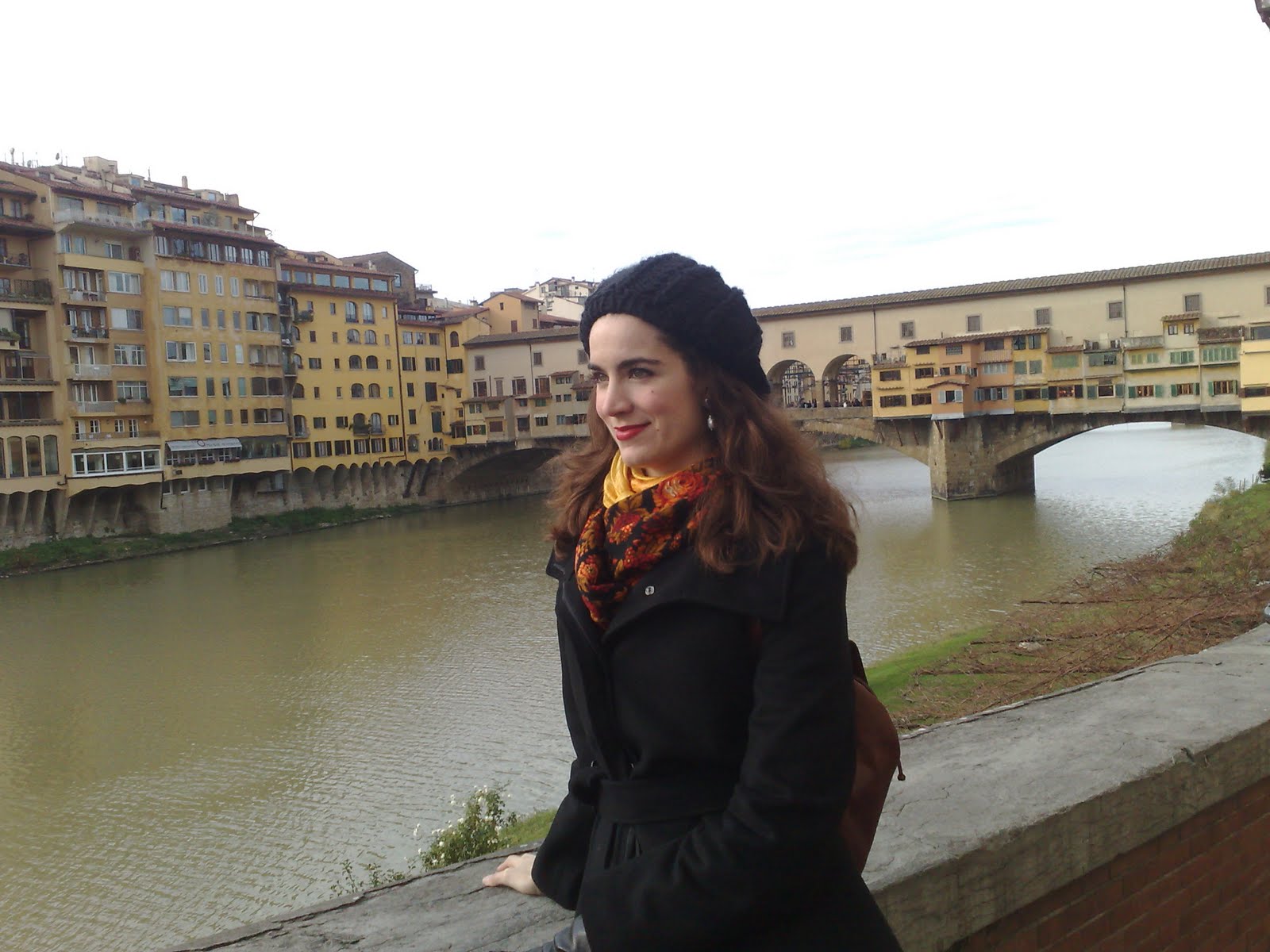
I took a short trip to Florence and London before Christmas. I got stuck in Paris airport on my way into the UK and was delayed by a day and took the train instead, luckily one of the last before the Eurostar debacle. I still don’t have my luggage, two weeks later. But I had a great time nevertheless. This is me looking perky on the Arno.
I always thought that this was called Piazza della Signorina, and that that was a very nice name to give to the civic center of Florence. Signoria makes more sense but is somehow less charming.
This is me on Via Cavour, around the corner from the Baptistry. Our hotel was once a mansion Franz Liszt bought for his girlfriend. Across the street was Rossini’s house and next to that, Pallazzo Medici.

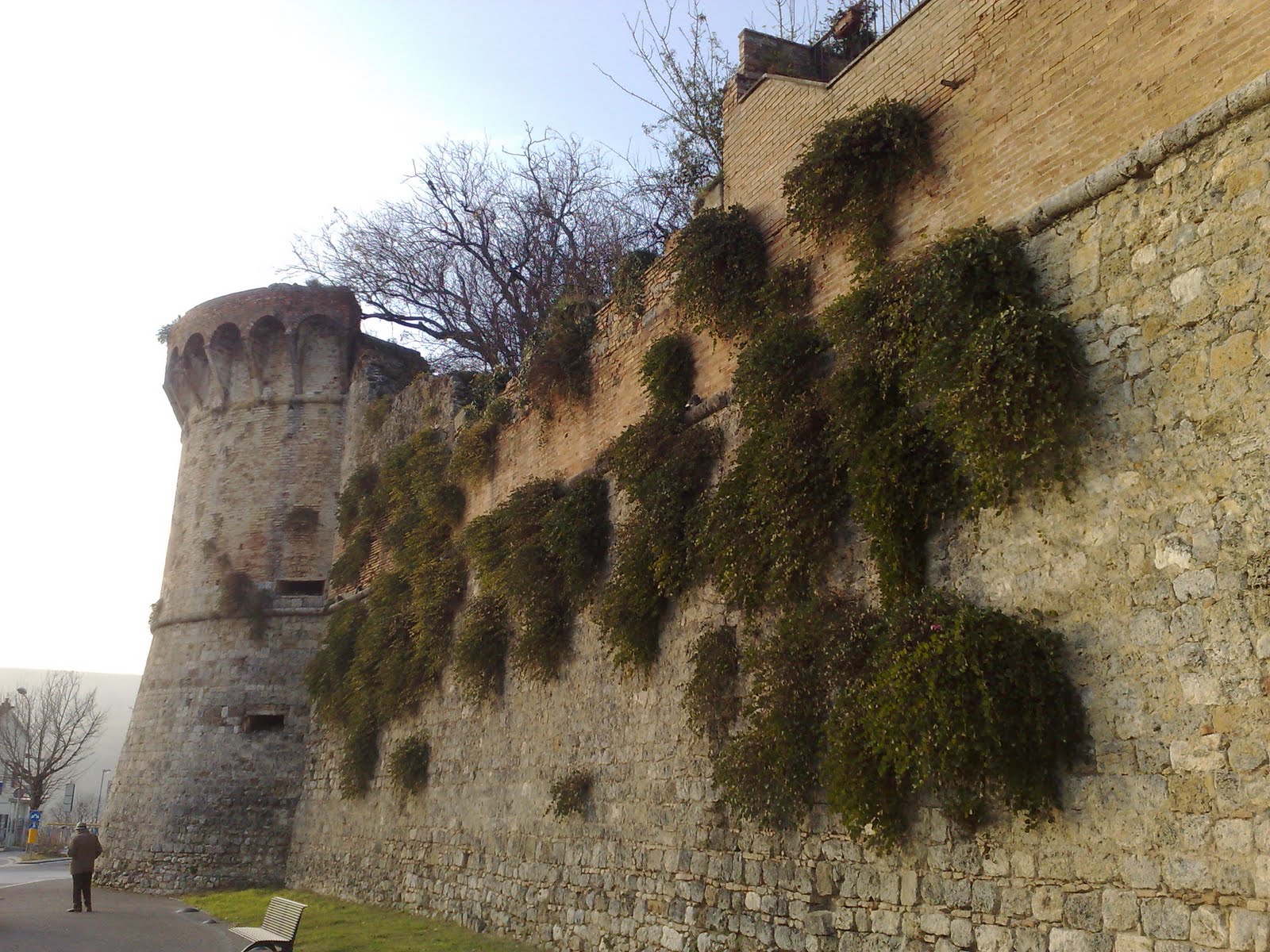
This is the library in the cathedral at Siena.This is the outer wall of the Medieval town San Gimignano, famous for its towers and excellent white wine.

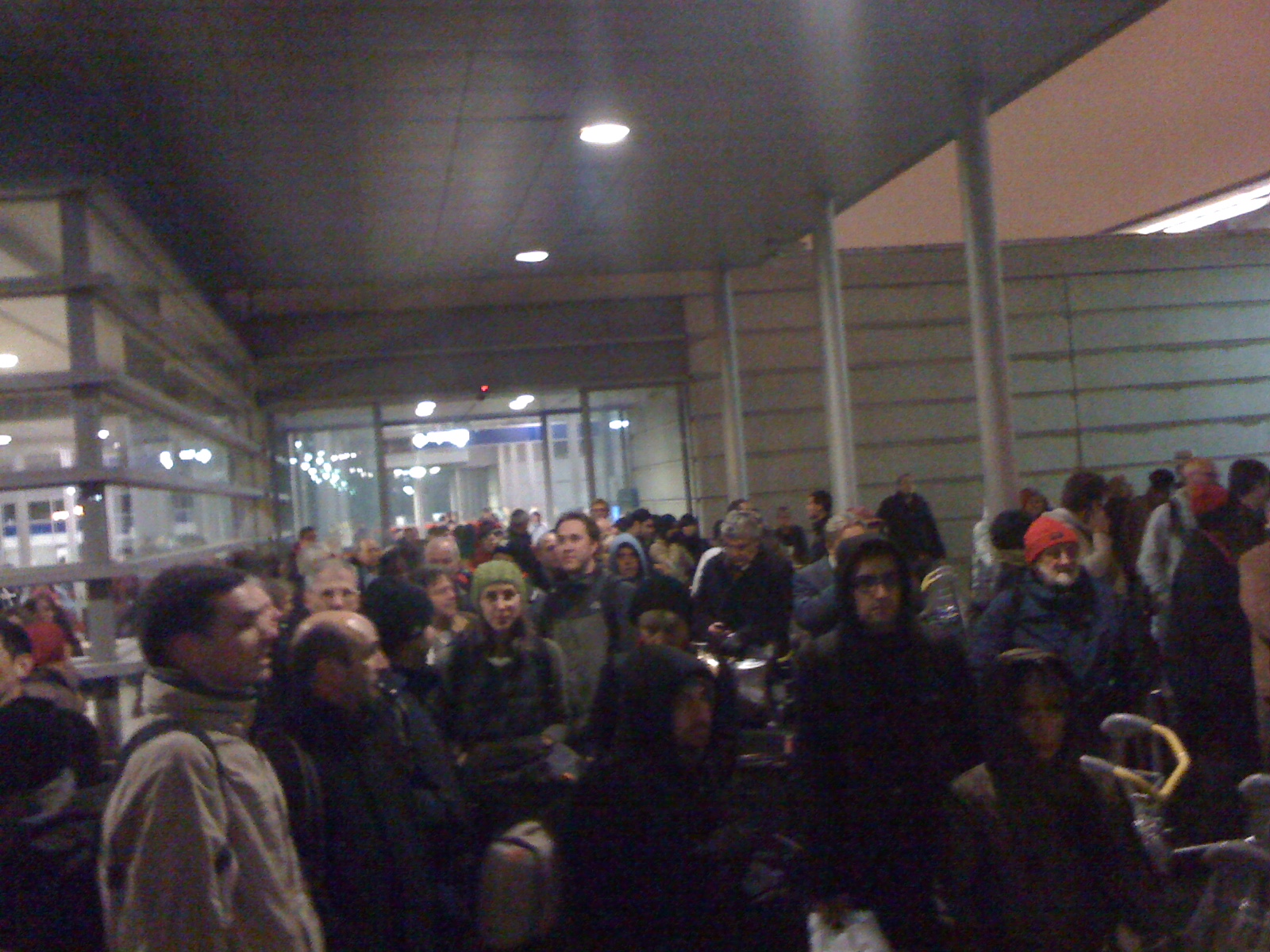
I was stuck in Paris overnight on my way to London. I spent several hours in line with customer service, and then another hour outside with all these people waiting to be taken to the hotel. But every bus that came by was for a different hotel than most of us were placed in. Each time a bus pulled up, people crowded around it with their red noses and screaming children and begged to be let on while the drivers physically blocked the doors and screamed “non!” before driving off with empty cars. No one was there to give information, but when I decided I couldn’t take it anymore, I wound my way back to the customer service desk where someone was yelling at the assistant in German, and realized that whatever he was yelling was probably similar to what I had hoped to address more temperately, and that my mission was futile. But then, someone who had been standing outside with me caught up with me to relay a rumor he had heard that they were giving out taxi vouchers since all the Air France buses had been canceled. I knocked a few old ladies over and punched a small child in the throat to get to the desk that supposedly held the vouchers. As I stood in line, I asked an air France employee who happened to be strolling by with an unlit cigarette in his hand (could the French be any more French?) if there were in fact taxi vouchers and if this was the right line to get them in, and he replied that yes, actually, all the buses had been canceled and that I was in the right line to get taxi vouchers which did indeed exist. I told him that there were dozens of people still waiting in the snow for the bus, and he shrugged and sauntered outside to smoke in the snow. When I got to the front of the line the customer service lady said, “wot taxee voushehrs? Zer arre non taxee voushehrs. You see zehr arre manee boeusses weetch arre coeumming…” A Scottish guy behind me yelled something incomprehensible at her, and I labored to maintain my composure against all my Ugly American instincts, and finally we both won our vouchers, and were immediately offered thrilling sums for them by the people further back in the line that had formed behind us and snaked across the terminal. I was turned down by five different drivers who either didn’t honor air France vouchers or didn’t know where my hotel was. By 3:30am I arrived at the hotel.
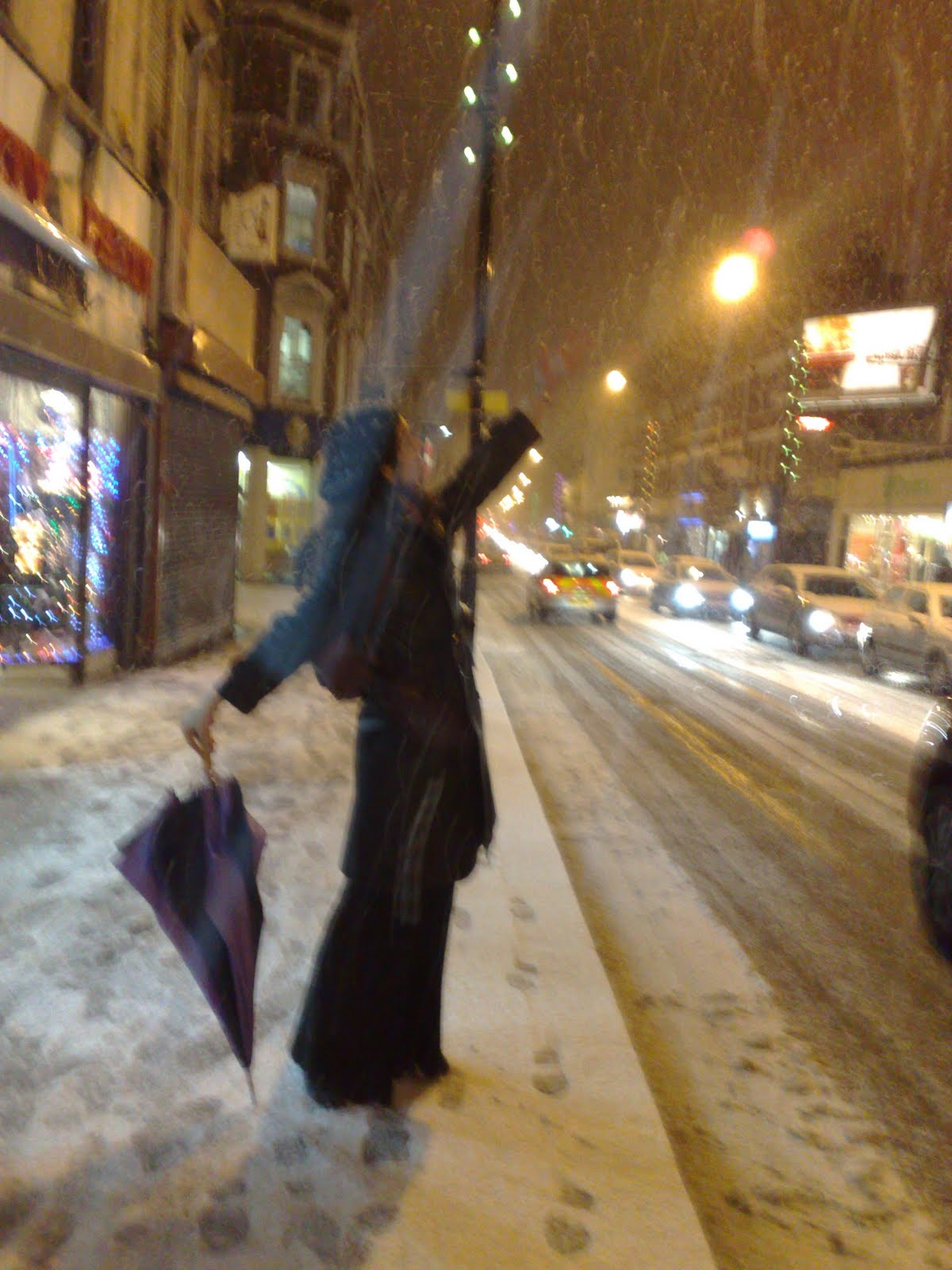
I was in London for another massive snowstorm. This is me in my old neighborhood on Kilburn High Road.
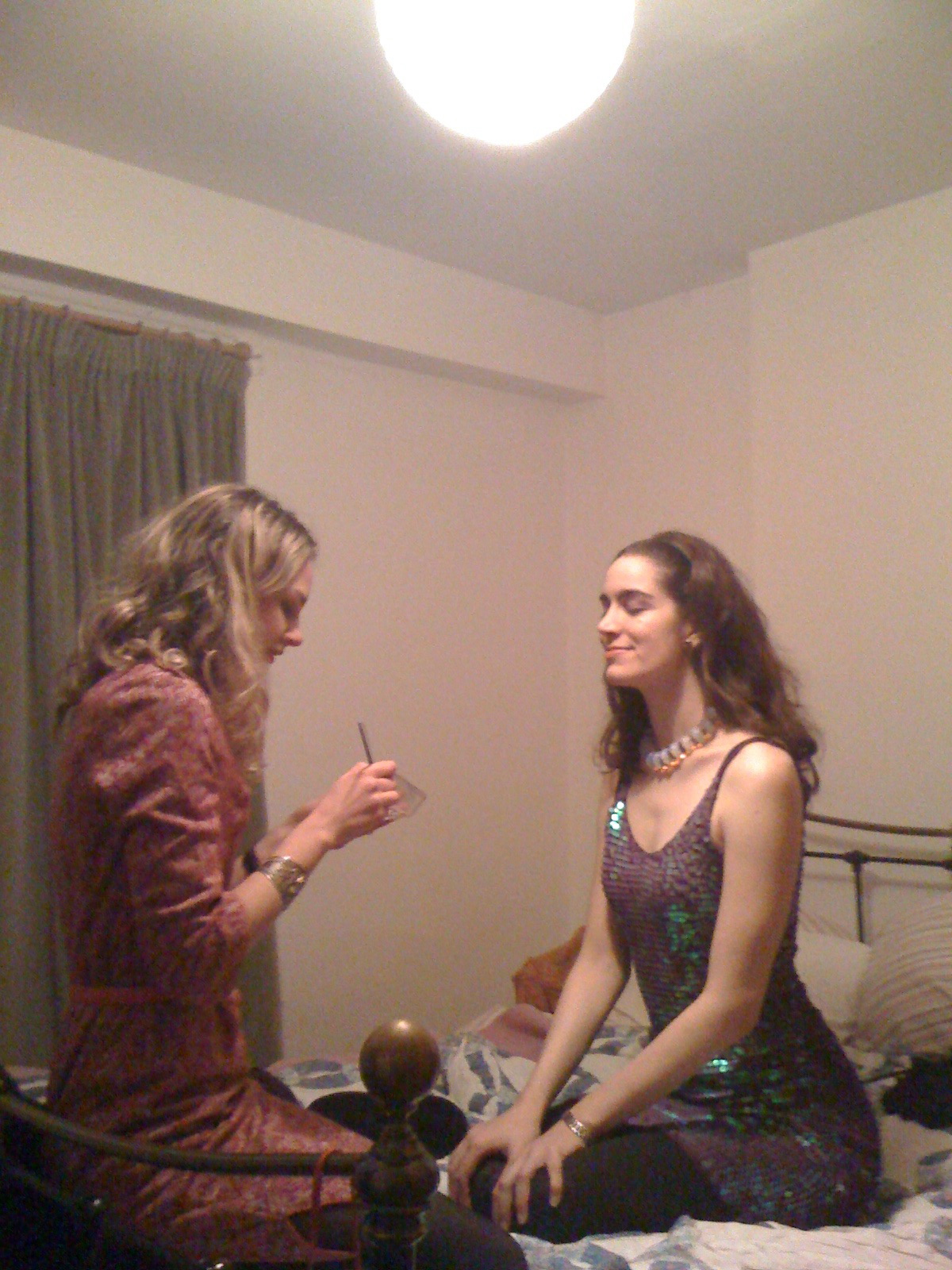
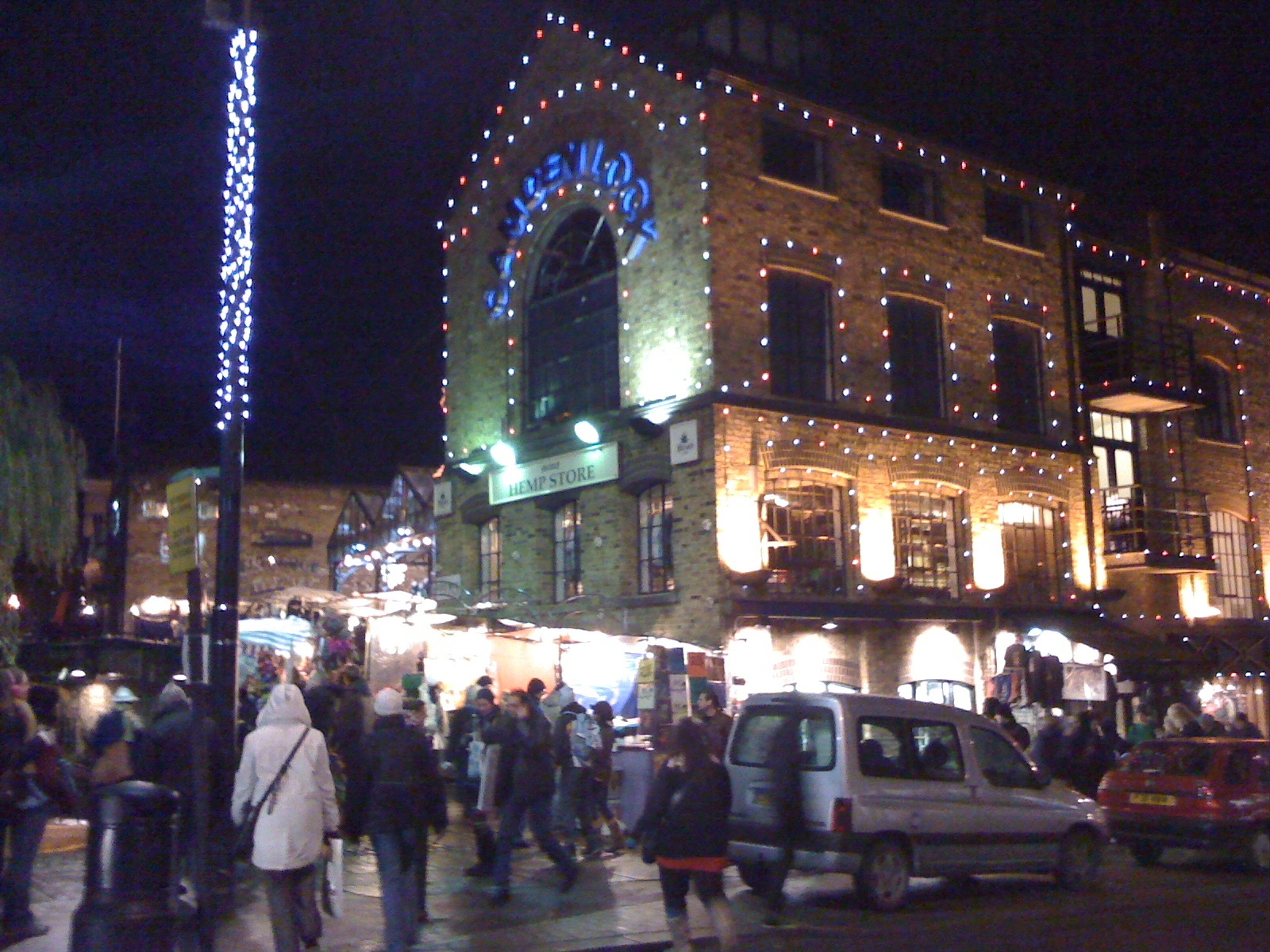
I had to glam up for Ben’s birthday but only had the clothes I flew in and no makeup. So Nat let me borrow her sequined minidress and Degie made me up like Cleopatra. My Ugg boots didn’t really match up, but whatevs.Camden town, as funky as ever.
My friend Matt treated me to brunch at Fortnum and Mason’s. Scarves do a lot to help one appear elegant despite not having changed clothes in four days. The ace up my sleeve is that you can’t smell a photo.
uh….maybe you should get high before watching this video. Even that might not help. I wasn’t sure if we were supposed to be doing an Irish jig or a highland fling, and I don’t know how to do either. Of course that didn’t stop me from trying. Laugh while you can, because Ben’s going to make me take this down when he finds out I posted it.

http://www.youtube.com/get_player

Posted in my travels, rude french people | 1 Comment