SF Ballet’s “Onegin”, Zyzzyva

photo by Erik Tomasson

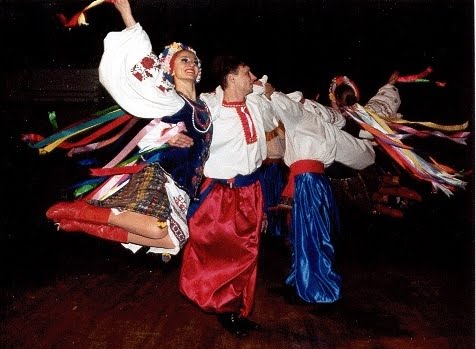
Often, the thing we love about the work of a great author is the ability to describe a moment, an emotion, some nuance of experience, in such a way that it is immediately recognizable to us, however foreign to our experience it actually is. We feel they somehow rummaged around in our mind and conveyed our lives back to us with different plots and more elegant language. The months after I graduated from college and was struggling to find work, feeling like I was both fabulous and doomed to uselessness, was probably the worst time to read The House of Mirth. And who would not recognize his own moments of mortified infatuation in Tolstoy’s description of Levin: “He avoided long looks at her as one avoids long looks at the sun; but he saw her, as one sees the sun, without looking.”

Ballet can elicit the same recognition: it doesn’t matter that most of us are too stiff, short-limbed, paunchy, or weak to even think without strain of the movements we see performed. Though we speak a different language, we can “read” dance and transcribe its expressions as our own. In Kenneth MacMillan’s “Romeo and Juliet,” when Romeo has left Juliet’s bedroom and fled the city, she pulls the window curtain aside, arches her back, thrusting her chest toward the dawn light streaming into her room. Somehow, we know she is asking the gods to assist her in her helpless, entirely vulnerable state, that this is the physical manifestation of heartfelt entreaty. Though dancers portray human experience in a way that most people couldn’t and wouldn’t do themselves, they are able to evoke sympathetic experiences through their movements; we (ballet lovers, at least) watch and think, “Yes, this is what love/lust/fear/jealousy/etc. looks like,” and momentarily, feel it along with them. (continue reading)

Posted in ballet, REVIEWS, Russianism, San Francisco, theatre | Tagged , , , , , , , | Leave a comment

Joan Baez at Yoshi’s, Zyzzyva

Image

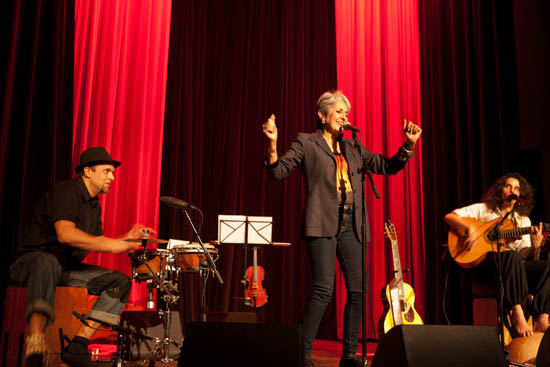
Joan Baez with her son, Gabriel Harris on the cajon, and Marianne Aya Omac. Photo by Jamie Soja

As diverse as the music performed in concerts is, so are the appearances of the audiences. James Mollison documented a spectrum of what he calls the “tribes” of attendees in his photography project and book The Disciples, a rough census of personae that converge around the archetypes represented by the musical acts Mollison followed. The grouped images of said disciples invite one to guess, before reading the captions, which performers each had come out for. It’s not hard: men in trucker hats and denim overalls, Merle Haggard. Men holding up sagging jeans by the crotch and women whose skirts barely reached their own, P Diddy. Union Jack mini-dresses, leopard print and afros? Spice Girls. Cinched lumberjack shirts, curly blonde wigs and feathery cowboy hats? Dolly Parton, obviously. Kiss makeup? You got it.

Recently at Yoshi’s in San Francisco, Joan Baez performed as a guest rather than as the main act, but the audience distinctly appeared to be of the Baez tribe. The restaurant side of Yoshi’s seemed to be patronized by slick young things coifed, Spanxed, and pressed into coy “my-eyes-are-up-here-jerk” cocktail attire. But inside the jazz club, the tone was far less bothered. The patrons were older, their dress casual and accented by the occasional ethnic jewelry piece. The shoes were decidedly comfort-oriented, the hair natural in color and texture, the makeup minimal on gracefully senescent faces. Sure, they could have been there for the comparatively unknown headliner from Montpellier, France,Marianne Aya Omac, but it seemed more likely that these were the people (or a small portion of them) who for the past five decades have been following Baez, rapt by her ever-burnishing voice, loving the ground whereon she stands. (continue reading)

Posted in damn good, EVENTS, Music, REVIEWS, San Francisco | Tagged , , , , , | Leave a comment

This is fun.

Did you know that Russians have been in California longer than San Francisco has been a city? In 1812, the tsarist government (which didn’t have much going on that year) chartered Fort Ross in what is now Sonoma County, to control exploration, trade, and settlement in the North Pacific. San Francisco’s own Russian Center is celebrating Fort Ross’s 200th anniversary in this year’s Russian Festival, showcasing musical acts like songstress Marina V and folk/jazz/blues/comedy team Limopo, performances of ballet, folk dance and singing, gymnastics, operetta, a gallery of the work of contemporary émigré artists, and food. (leave your diet and your vegan requirements at home). Loosen up for the dance party Friday night at the “World’s Greatest Vodka Bar” and find your Valentine’s Day gifts at the amber jewelry boutiques. At its Sutter location since its
founding in 1939, the Russian Center has held this family-friendly event every April, but has regular performances and classes for children and adults, a state certified pre-school Teremok, the offices of Russian Life Daily Newspaper, and a Russian library, in case you ever wanted to read Notes from Underground in the original cyrilic. (more information)

Posted in EVENTS, Russianism, San Francisco | Tagged , , , | Leave a comment

The Edwardian Ball got Balmy on the Crumpet, Yo. SF Weekly

San Franciscans are serious about partying. We’ve been to a lot of fancy dress events, and a lot of events that weren’t “fancy dress” per se, but which were treated as such, apparently just for kicks. But the Vau de Vire Society’s Edwardian Ball last weekend inspired the most spectacular — and thoroughly thought-out and executed — costumery we’ve ever seen donned by so many people in one place. The playboy mansion would blush at the amount of cleavage on display, blossoming over a whale graveyard’s worth of boned corsets, and framed in taffeta, lace, and feathers. Men wore top hats and fedoras and multiple-piece suits. The Edward Gorey theme inspired more macabre features such as white contact lenses and cadaver-glam makeup. A striking and slightly confusing element was the pervasion of steampunk — goggles everywhere, leather hip holsters, and jewelry made of old watch parts.

People dressed to party like it was 1909, and many also had the dances down. This was most apparent in the earlier portion of the night, when the ballroom floor wasn’t filled to capacity, and many couples took advantage of the free space to perform elaborate and antiquated ballroom moves while the rest of us gawked enviously and wondered whether Arthur Murray’s still existed. One couple danced an energetic skipping jig around the floor in circles; later that night they huffed through an escalatingly tempo’d Lindy to the honky-tonk trio in the basement. Many couples waltzed, most in a traditional box step, but one intrepid male couple swung a fearsome Viennese — fearsome in that both parties executed complete 180 degree turns with every measure without spiraling into the wallflowers or crashing and rolling into inadvertent flagrante delicto on the dance floor. (continue reading)

Posted in damn good, EVENTS, San Francisco | Tagged , , , | Leave a comment

I’m going to this tomorrow. Are you?

So you want to “get fit.”

 But prolonged periods of training are dangerous; you eventually find yourself sporting a Borat leotard and kissing your own biceps in the mirror. When you’re finally sick of post-workout Jamba Juice and hating the entire contents of your ipod, you quit—but you don’t make a clean break with your training. You tell yourself you’ll go back; you just don’t feel like going today. Or tomorrow. Or all next week or year. But you’re still paying your monthly dues, because this is San francisco, where only the dead don’t exercise. Surely you’ll go back.

Why not try something new? Dance—any sort of dance—demands consideration of an aesthetic end as well as physical rigor, so it can wipe the floor with physical training in terms of keeping your mind engaged. You’re tasked with not only completing a complex set of movements while sweat streams into your eyeballs, you also have to make it beautiful, and every dance has its own ideal of beauty. If your legs have no turn-out, maybe ballet isn’t for you, but jazz is more forgiving. If jazz involves too much jumping around, maybe the smoothness of belly dance is the right fit. I’ve heard from particularly fearsome and sexy friends that Zumba is both fearsome and very sexy. It must be a conflation of “zoom” and “rhumba.” My hips hurt just thinking about it.

You can try out these and many others for $5 (all-day, as many or as few classes as you wish) on January 28th at Lines Dance Center in the old Oddfellows Hall building off Market street. Please don’t show up in your Borat leotard. (info here)

Posted in ballet, classes/workshops, damn good, EVENTS, San Francisco | Tagged , , , , , , | Leave a comment

Paul Madonna’s Everything is its Own Reward, Art Practical

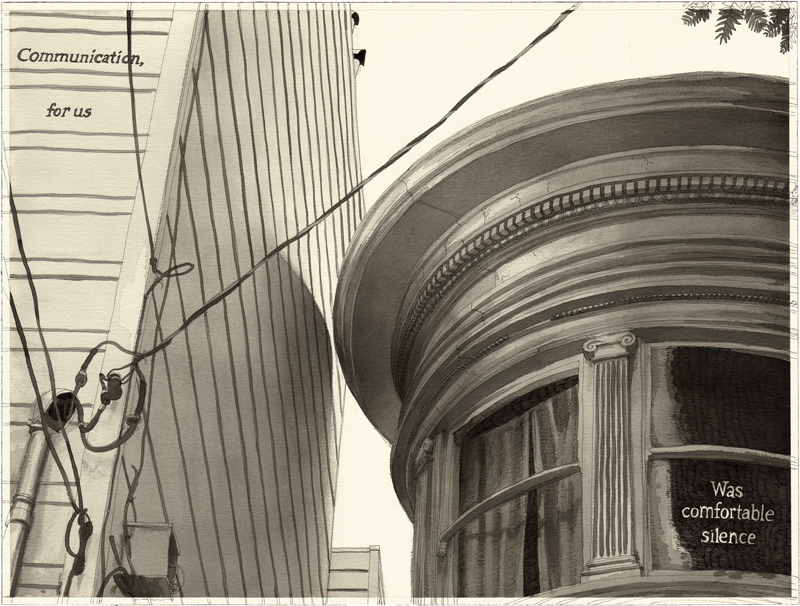
In 1955, the French theorist, writer, and filmmaker Guy Debord defined the term psychogeography as “the study of the precise laws and specific effects of the geographical environment, consciously organized or not, on the emotions and behavior of individuals.”1 The art that charges our imaginative sense of place conveys not only a story but also a rhythm of life—a convergence of personalities, ambitions, and attitudes that could only have taken place there and then—traces of which rise off the changed, sometimes unrecognizable streets decades later. It is why, despite George Gershwin’s intent for Rhapsody in Blue to be heard as a “musical kaleidoscope of America,”2 his composition became associated with and still evokes New York, a city whose glories and debacles have become synonymous with the American Dream. It is also why, in the din of Paris cafés, one can imagine oneself a reveler in Hemingway’s A Movable Feast and why the term Dickensian is still used as shorthand to describe the peculiar squalid charm of London’s old working-class neighborhoods. The artists who limn the embedded myths of our cities are master interpreters of psychogeography, the profound and nuanced influence of place upon person.

The monograph Everything Is Its Own Reward (City Lights Publishers)—the artist and writer Paul Madonna’s continuation of his popular San Francisco Chronicle weekly series, All Over Coffee—actually includes images of other cities (Buenos Aires, Rome, Paris), but it initially feels like San Francisco’s book, both in focus and in spirit. Even though Madonna’s ink-and-wash drawings depict a city without people or cars (and it is not typical that one can paint a successful portrait of a place without some attention to its people), his empty streets are nevertheless rich with signs of life and psychic resonance. Madonna captures the kind of serenity with which San Francisco seems perpetually blessed and that other cosmopolitan cities only evince in the very early morning. This strange illusory relief from the usual urban neuroses is one reason that people continue to fall in love with San Francisco when they visit and that compels them to stay, even after the illusion has been recognized as such. (continue reading)

Posted in ART, damn good, publishing, REVIEWS | Tagged , , , , , , | Leave a comment

Francesca Woodman at SFMOMA, Huffington Post

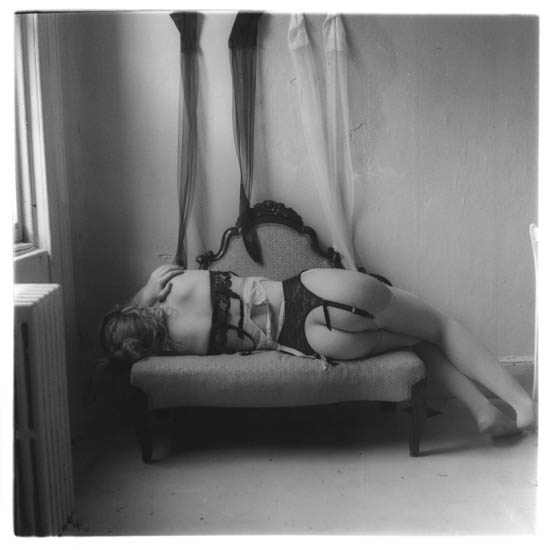
Francesca Woodman, Polka Dots, Providence, Rhode Island, 1976; gelatin silver print; 5 1/4 x 5 1/4 in. (13.3 x 13.3 cm); courtesy George and Betty Woodman; © George and Betty Woodman

There are things in that paper which nobody knows but me, or ever will. Behind that outside pattern the dim shapes get clearer every day. It is always the same shape, only very numerous. And it is like a woman stooping down and creeping about behind that pattern. – Charlotte Perkins Gilman, The Yellow Wallpaper

A young woman sits primly in a high-backed wooden chair. She wears what looks like a late Edwardian dress, and her hair is pulled back. She exudes stillness; one might imagine that she’d be just as still were this a moving picture rather than a photograph. Yet her stillness does not seem to be that of relaxation, but of composure: She holds the fingers of one hand in the other; surely, if her hands were left free rather than posed, they would simply hang there. Her feet are placed side-by-side, flat on the ground, and her knees are held together, which takes conscious effort, if minimal. It seems that what tension there is in her body is put towards containing it, restricting its potential for sloppiness (and the character associations therewith) and assuming a conventionally lady-like posture. She stares out towards a light source out-of-frame, which might be a window or door.

Alone, it would be a beautiful image: pensive, poetic, a study in what physical composure and a distant gaze can convey. But behind the sitter, blurred from movement, a naked girl swings from the doorjamb, a wild apparition at odds with the placidity of the foreground. She faces away from the sitter, and isn’t obviously engaged with or even aware of her at all, but it’s hard not to infer some psychic relationship between the two. In fact the contrast between them almost presumes a connection, the self-possessed gentlewoman and the stifled desires and impulses rioting behind her serene visage. (continue reading)

Posted in damn good, photography, REVIEWS | Tagged , , , , , , , , , , | 1 Comment

Carte Blanche Gallery and Bookshop

Shinya Arimoto

I discovered a lovely gallery/bookshop in the Mission the other day. Carte Blanche features the work of twelve international emerging artists, curated by Parisian transplant Gwen Lafage. Prints are for sale framed or unframed, and there is a small but addictive collection of photobooks as well, both by prominent and smaller publishers, and even some self-published work. The couches for lazy browsers like myself are much appreciated.

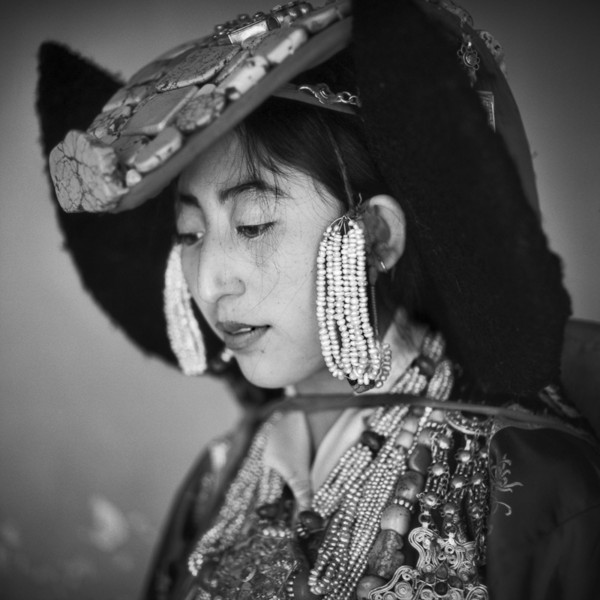
I particularly liked the work of Japanese artist Shinya Arimoto, whose Portraits of Tibet (1999) reveal a tough but warm people in their matted hair and battered woolens, squinting against the Himalayan sun. I also enjoyed Tomas van Houtryve‘s two Cuban series, American Ballet in Cuba and Cynical Realism, an interesting juxtaposition of the high regard for art and the low regard for general public welfare on the island.

Tomas van Houtryve

I hope Carte Blanche will expand its print and book collection; the month-old shop is spacious and I am no fan of tasteful minimalism. With a few more tables of photobooks and magazines (there are now two), more couches, and perhaps an expresso machine, it could easily turn into a photography lover’s favorite haunt.

Also, this makes for two cool photo-oriented businesses in the Mission. Photobooth is just a few blocks away on Valencia.


Posted in photography | Tagged , , , , , , , | 1 Comment

Masters of Venice at the De Young, Art Practical

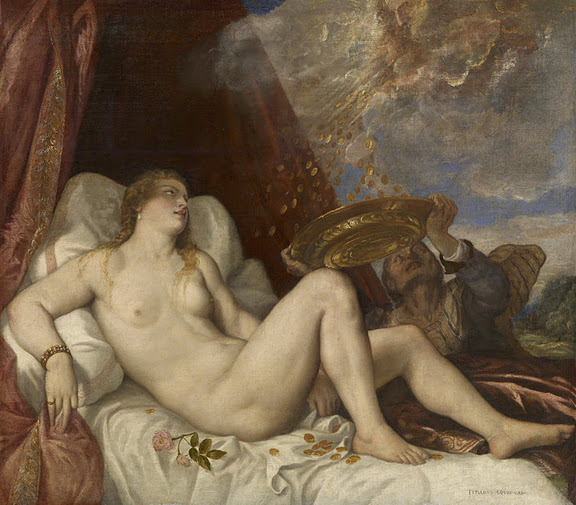
Masters of Venice: Renaissance Painters of Passion and Power, composed of work on loan from Vienna’s Kunsthistorisches Museum, provides a small but potent display of both the flights of inspiration and technical advancements that made fifteenth- and sixteenth-century Venice an artistic hub. The exhibit is entirely devoted to depictions of people famous, anonymous, and mythological, and is refreshingly light on religious subject matter for a show of Italian Renaissance art. The collection not only offers insight into the artistic foment of the time, it is also a cumulative portrait of a city of robust appetites—for power, wealth, status, beauty, and sensual pleasures. The patronage of the city’s rich supported dynasties of painters, and the cache of commissioning portraits, private erotic artwork, or paintings made with expensive innovations of the time, such as exotic pigments, not only furthered the careers of the artists but altered the characteristics of the art they created. Color, previously considered the sensual, “feminine” element subordinate to the intellectual, “masculine” compositional balance favored by fifteenth-century Florentines, came to dominate the art of the Renaissance.1 Venice was the center not only of the pigment trade between the East and Northern Europe, but of the development of its usage, creating the distinctive richly colored Venetian style. The snug relationship between art and money, status and sensuality, and the masculine and the feminine, is hard to ignore while examining Masters. (continue reading)

Posted in ART, damn good, painting, REVIEWS, San Francisco | Tagged , , , , , , , | Leave a comment

some thoughts on OWS art

I’m late to this party, obviously, but I’ve enjoyed viewing the art inspired by Occupy Wall Street, and find a lot of it beautiful, provocative, and inspiring, an ideal combination for what is, forgive the now-derogatory term, propaganda. Some images are more successful than others in terms of aesthetics, but some also capture the ethos of the movement better than others as well. I recently came across a relatively new poster which, while stunning, is an example of not quite nailing the concept of OWS. I think comparing it to the first image in Adbusters’ initial call-out is the best way to delineate my thoughts on it.

The use of the bull in the original image was integral to its power. The animal had been symbolically appropriated for its instinctive aggression, the upward thrust of its attack (like the price of shares in a burgeoning market, geddit?) and sheer terrifying muscle, by an institution that flattered itself that adopting these qualities in the service of artificially inflating the price of wheat in Bangladesh was something to brag about. In Adbusters’ original poster, a ballerina balances on the bull’s back. Suddenly, the bull is symbolically reappropriated, its strength used in the service of art, the delicate, the feminine, these elements antithetical to the notoriously-misogynistic, brutally pragmatic world of Wall Street. The image implies the triumph of these elements—she is, after all, standing on the bull’s back, and high above the unrest on the ground, a visually dominant position. For all her barefoot grace, the ethereality of her limbs, the finely-whittled waist, the expression on her face is one of calm determination. Indeed, she seems to be staring down the bull as if to say, “Don’t even think of bucking me off.” Yes, she and all she represents have triumphed, but peacefully, without subjugation or violence; she is “occupying” the bull, so to speak. It was the perfect harbinger of a movement committed to the promotion of human achievement beyond the making of money, and that prides itself on (its own) peacefulness.

To be sure, this new image is a powerful one. Like the best graphic art inspired by the Occupy movement, its palette is minimal, composition simple, and message, unmistakable. But it troubles me anyway. I’m no PETA fanatic, but the suggestion of violence against an animal nevertheless leaves me uneasy, and conflicts, I believe, with the spirit of the movement. The artist did nothing more objectionable than what human beings from Aesop to Disney have done with animals–that is, anthropomorphise them with qualities they are incapable of possessing, imbuing his subject with menace by painting it with empty cartoon-demon eyes and hooves as sharp as its horns. But what comes across in the image is a desperate beast struggling against man-made bonds, possibly on the verge of being pulled apart.

I don’t think it’s what Occupy Wall Street should want to project to the world, though the movement’s treatment by the police and the state’s silence on the outrages is revealing a widespread culture of brutality and lack of accountability that the occupiers may well be tempted to answer with the sort of violence dramatized in the poster. Part of Occupy’s attractiveness (certainly its claim to the moral high ground) is its commitment to peace, its refusal to react in kind to the thuggery with which it’s been met. The poetic, slightly surreal image in the original poster set the tone, and that tone has not yet been altered by any change in tactic by the people marching, assembling, setting up tents, and running portable temporary libraries in cities across the globe. Let’s hope it does not get to the point where the second poster expresses the spirit of the movement more truthfully than the first.

Posted in REVIEWS | Tagged , , , | Leave a comment